Dr David Gunn Teaches Micro-Suturing at the UQ Incision Surgical Conference
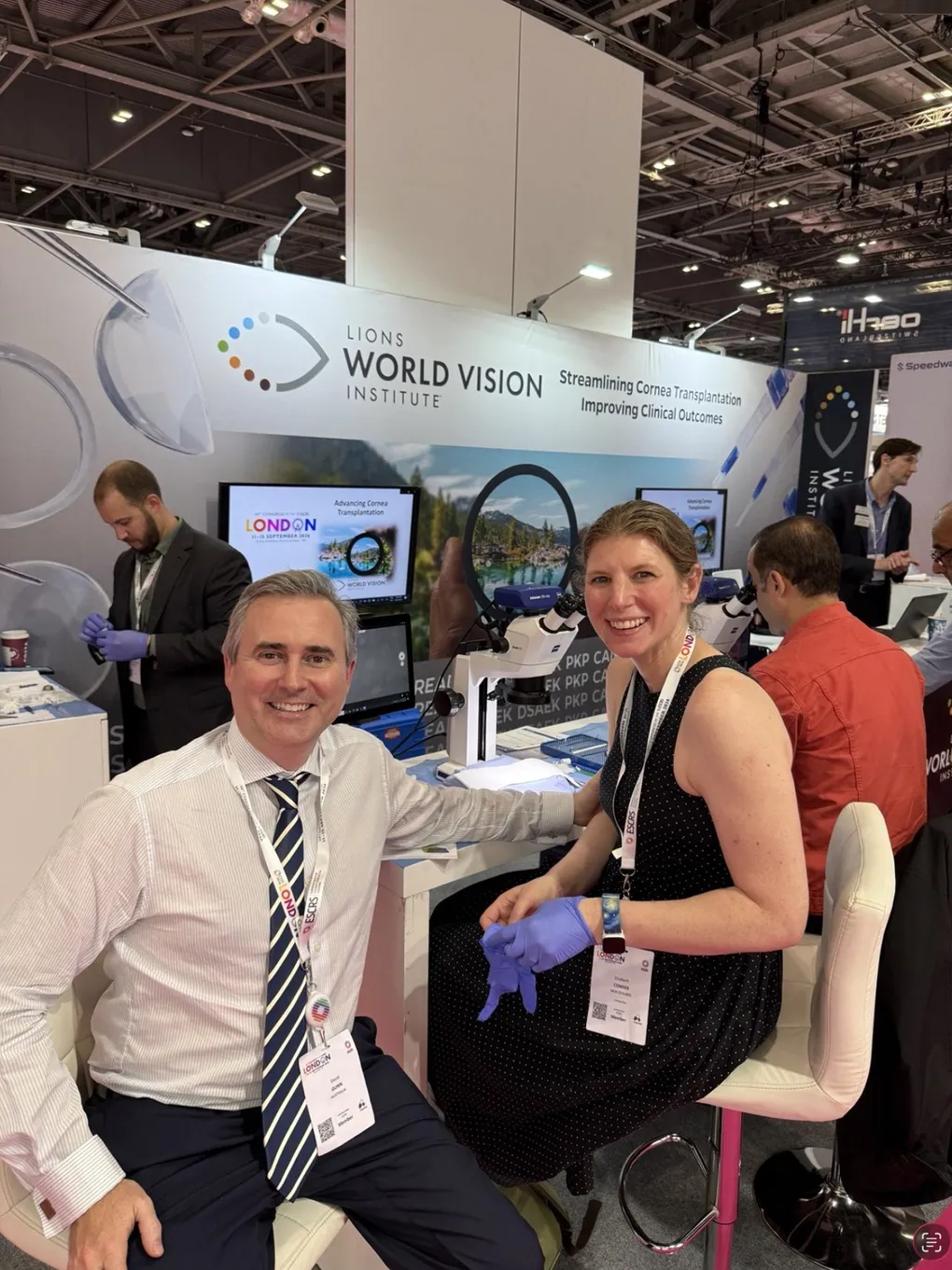
On Sunday 25 October 2026, medical students at the University of Queensland spent two hours learning to place sutures in a cherry tomato. Dr David Gunn, corneal, cataract and refractive surgeon at the Queensland Eye Institute and a senior lecturer at the University of Queensland, was one of the ophthalmologists at the tables for the ophthalmology skills workshop of the UQ Incision Surgical Conference, held at the Advanced Engineering Building on the St Lucia campus.
The UQ Incision Surgical Conference
Incision UQ is the surgical society of the University of Queensland Medical Society. Established in late 2017, it runs skills workshops, journal clubs and anatomy tutoring through the year, and advocates for surgical specialties that are difficult to enter at the postgraduate level. Its annual conference brings those specialties to students for a day of hands-on sessions.
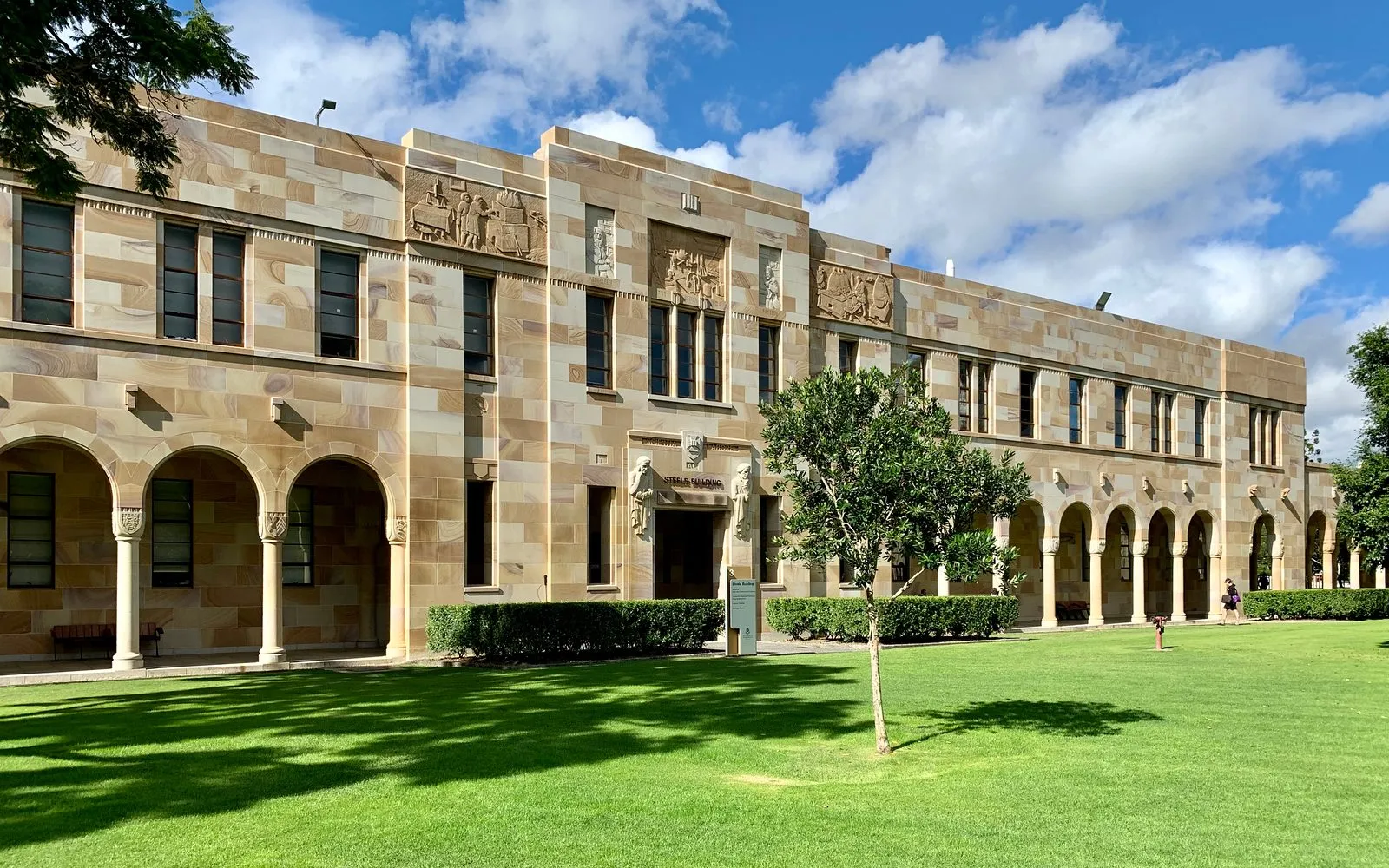
The Great Court at UQ’s St Lucia campus. The conference ran in the Advanced Engineering Building nearby. Photo: Chris Olszewski, Wikimedia Commons, CC BY-SA 4.0.

The ophthalmology session ran from 11 am to 1 pm. In September the Queensland Branch of the Royal Australian and New Zealand College of Ophthalmologists (RANZCO), chaired by Dr Mark Chiang, asked its Fellows to staff the workshop, and Dr Gunn put his name down the same day. Each ophthalmologist took a table of five to seven students, guided them through corneal suturing on the tomato model, and answered their questions about the specialty. Alcon brought model eyes so the students could also try inserting an intraocular lens.
Why a tomato?
The model comes from Brisbane. In 2022 Shenouda Girgis, Jordan Lee and Dr Graham Lee described a cherry tomato, taped into the eye hole of a plastic face mask, as a low-cost simulator for ophthalmic micro-suturing (Clinical and Experimental Vision and Eye Research 2022;5(1):29–31). A tomato of about 25 mm across stands in for the globe. The mask lets the hands rest on the cheek and forehead as they would in theatre, and a 2× illuminated magnifier does the job of the operating microscope. Beginners use a 7-0 braided suture on a 3/8-circle spatulated needle; 10-0 nylon, the suture used in real corneal surgery, is kept for advanced trainees. Dr Lee demonstrates the model and the technique in a short video, Microsurgery Simulation Model (Vimeo, 2022).
The model was first run with 120 students at the Australasian Students’ Surgical Conference on the Gold Coast in 2022, in 45-minute sessions of 30 students. Surveyed afterwards, students with little or no suturing experience reported more confidence in microsurgical suturing by the end of the session.
Tomato skin does not handle like corneal stroma, but the principles transfer. Load the needle in the holder at the right point. Enter the tissue at 90 degrees. Follow the curve of the needle instead of pushing it. Tie a knot that holds without cheese-wiring through the tissue.
What micro-suturing means in theatre
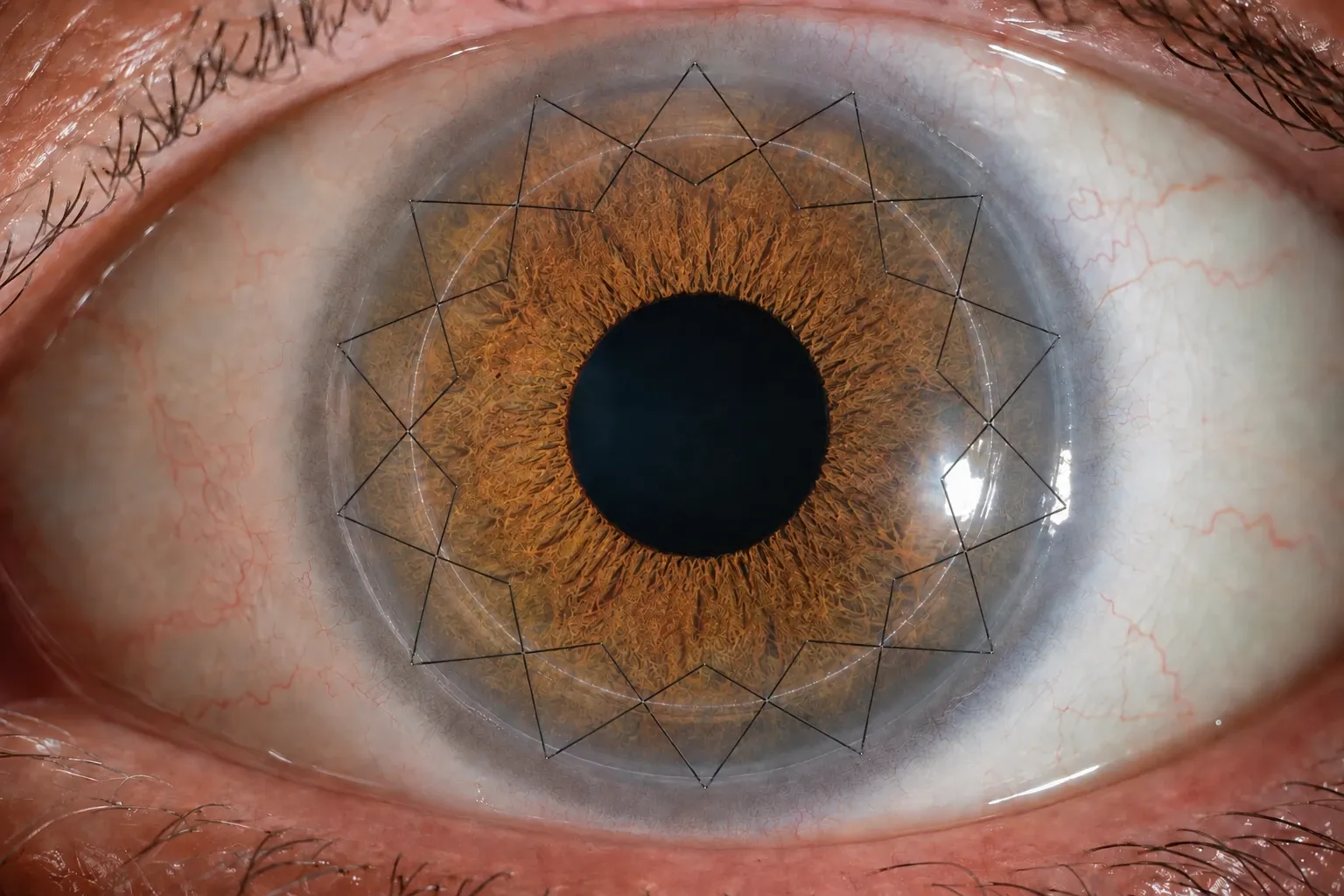
A 10-0 nylon suture is 20 to 30 µm thick, thinner than a human hair. In a corneal transplant, Dr Gunn secures a donor graft of about 8 mm across with 16 interrupted sutures or a double running suture, each bite placed at close to 90 per cent of corneal depth and tensioned so the graft heals with as little astigmatism as possible. The same skills close corneal wounds and repair injuries to the eye.
For a student, the workshop is a first look at the precision the specialty asks for, and a way to find out whether they enjoy it. Some find the work comes naturally. Others find it hard. Both are useful things to learn in second year rather than in a training programme.
Mentoring students who are thinking about surgery
Dr Gunn holds an appointment as a senior lecturer in the University of Queensland’s Faculty of Health, Medicine and Behavioural Sciences, through the Mater Clinical Unit, and graduated from the University of Queensland with First Class Honours. Teaching medical students is part of that role. The second half of each clinician’s brief on the day was to talk about the path into ophthalmology: what the RANZCO Vocational Training Program involves, how competitive entry is, and what a working week of cataract and corneal surgery looks like.
His own path ran through ophthalmology training in Queensland, where he was awarded the K.G. Howsam gold medal for the highest results in the Australian and New Zealand final ophthalmology examinations, fellowship training at the Royal Brisbane and Women’s Hospital, subspecialty training in corneal, advanced cataract and refractive surgery at Bristol Eye Hospital in the United Kingdom, and a return to Brisbane, where in May 2021 he performed the first CAIRS procedure in Australia. He now trains surgical registrars as well as medical students, and sits on the RANZCO training selection committee. Feedback from the students, relayed by the organisers after the day, was positive.
Medical students interested in ophthalmology can find Incision UQ through the UQ Medical Society. The tomato model paper is published under a Creative Commons licence, and the model costs a few dollars to set up at home.
Frequently Asked Questions
What is the UQ Incision Surgical Conference?
What is the tomato model for micro-suturing?
Why do eye surgeons need micro-suturing skills?
Is Dr Gunn a lecturer at the University of Queensland?
How do you become an ophthalmologist in Australia?
Can medical students spend time with Dr Gunn in clinic or theatre?