


Sub-Specialist Expertise
Fellowship training at the renowned Bristol Eye Hospital (UK) specifically in advanced corneal surgery.
Dr Gunn is one of Queensland’s most experienced corneal transplant surgeons. He is one of just a few surgeons in Australia who routinely performs corneal transplants with bladeless femtosecond lasers.
A corneal transplant (keratoplasty) is a surgical procedure where a diseased or damaged cornea is replaced with healthy corneal tissue from a donor. While it is one of the most successful transplant procedures in medicine, modern ophthalmology has evolved from "full-thickness" transplants to "selective" transplants—replacing only the specific layers of your eye that are affected.
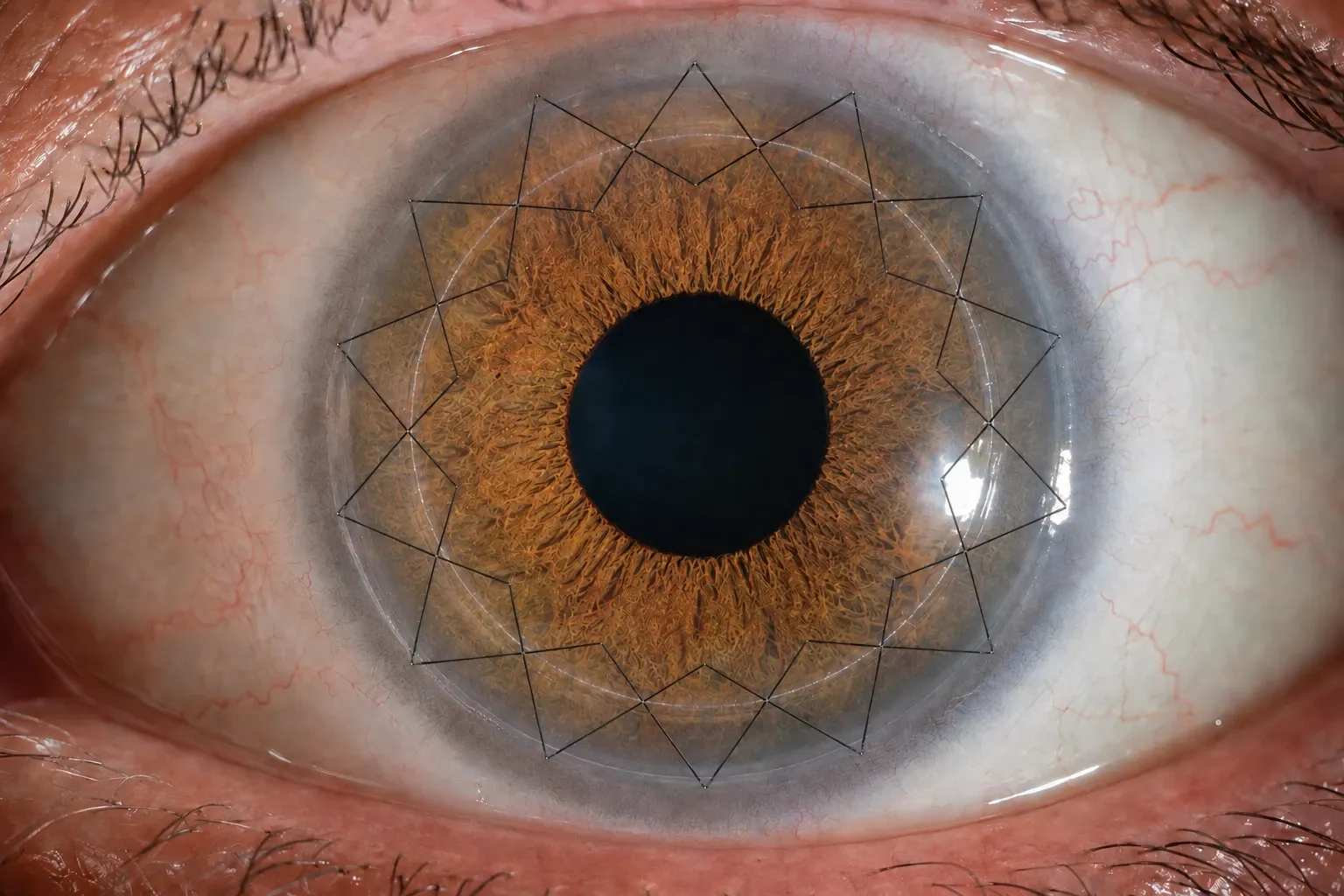
Dr. David Gunn is internationally trained in the full range of modern corneal graft techniques. His philosophy is to be as minimally invasive as possible, preserving your own healthy tissue whenever possible to reduce the risk of rejection.
Used for diseases of the back layer (like Fuchs'). We replace only the inner 1% to 5% of the cornea. These offer the fastest recovery and best vision.
Deep Anterior Lamellar Keratoplasty is used for keratoconus or scarring on the front of the eye. We replace the front 95% of the cornea while keeping your own healthy inner layer.
The traditional 'full-thickness' transplant. While superseded in many cases, it remains the gold standard for full-thickness scarring or complex reconstructions.
Dr Gunn is one of the few surgeons in Australia with access to femtosecond laser keratoplasty technology. The vast majority of corneal transplant surgeons in Australia perform their procedures using manual (blade based) techniques.
Dr Gunn has access to the Ziemer Z8 femtosecond laser platform, which allows precise customisation of the corneal graft shape — resulting in better wound healing, faster visual recovery, and superior long-term outcomes compared to traditional manual trephination.
Fellowship training at the renowned Bristol Eye Hospital (UK) specifically in advanced corneal surgery.
Utilizing high-resolution anterior segment OCT to map your corneal layers with micron-level accuracy before surgery.
Dr. Gunn prioritizes 'lamellar' (partial-thickness) surgery, which offers higher structural strength and lower rejection rates than traditional methods.
"Dr. David Gunn's status as a RANZCO Gold Medalist and his international experience ensure you are receiving the most current evidence-based care available."
RANZCO Gold Medalist & first surgeon in Australia to perform CAIRS (2021)
Fellowship-Trained Corneal & Refractive Surgeon
The main steps of a full-thickness corneal transplant: the damaged cornea is removed, a clear donor cornea is set in place, and it is secured with a fine double continuous running suture.
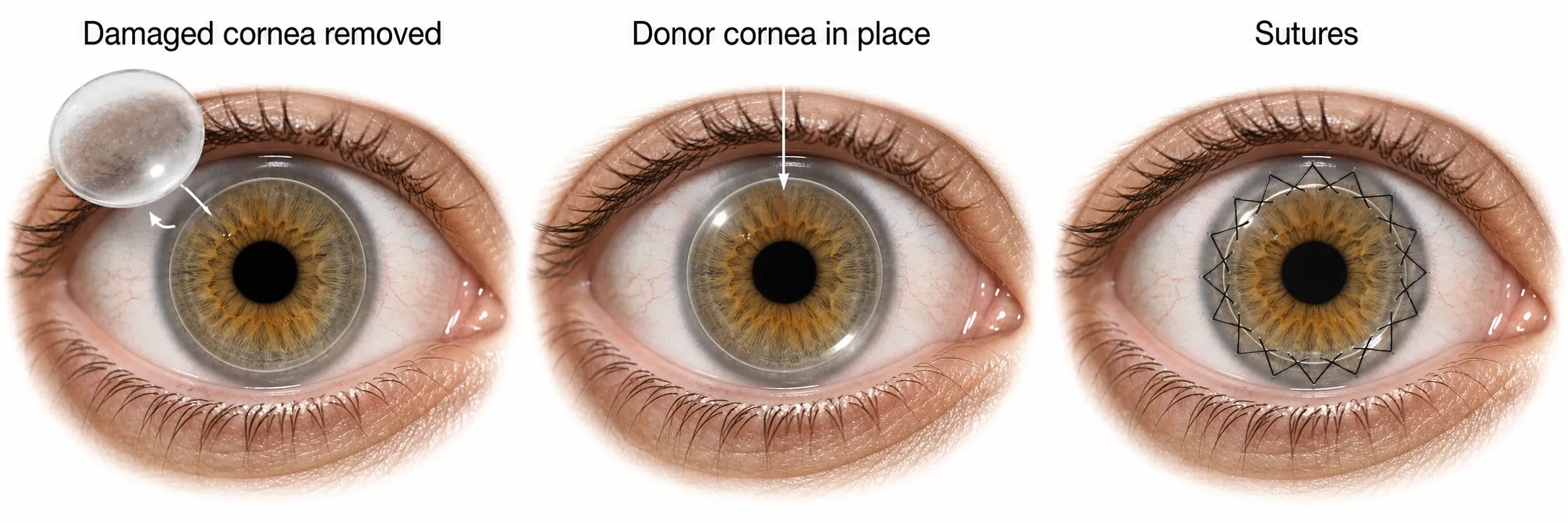
Corneal transplant tissue is provided by the Queensland Eye Bank. Donor corneas are carefully screened and tested to ensure safety. The gift of sight from a tissue donor allows Dr Gunn to restore vision for patients with corneal disease. Current waiting times for transplant surgery in Queensland vary — contact us for the latest information.
A detailed mapping session using swept-source biometry and topography. Dr. Gunn explains which type of graft is safest and what your 'visual potential' is.
3D CORNEAL MAPPING
Performed as a day-stay procedure in a private hospital under twilight sedation or general anaesthetic. The donor tissue is secured with microscopic sutures or an air/gas bubble.
SPECIALISED SURGERY
1–2 weeks off work for DMEK, and up to 4 weeks for PK. No heavy lifting or swimming for one month. For PK and DALK, sutures are slowly removed over 12–18 months.
STRUCTURED RECOVERY
Dr Gunn is one of Queensland's most experienced corneal transplant surgeons. Book a consultation to discuss your options.
Book Your Specialist Assessment
Written and reviewed by Dr David Gunn FRANZCO, FWCRS — Corneal, Cataract and Refractive Surgeon.
Last reviewed: 1 May 2026