WaveLight Plus Results and Early PanOptix Pro Experience at FOCUS 2026, Melbourne
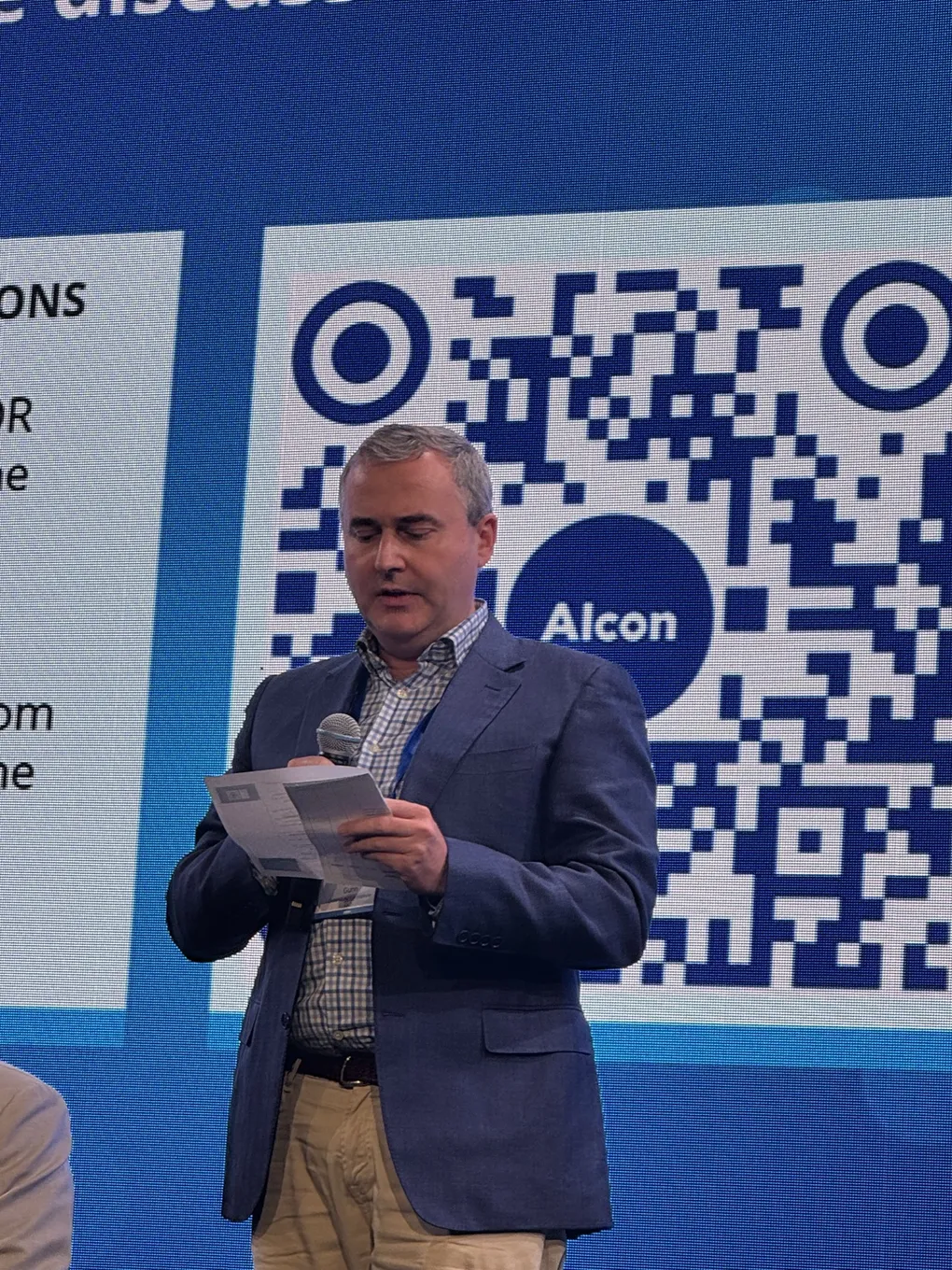
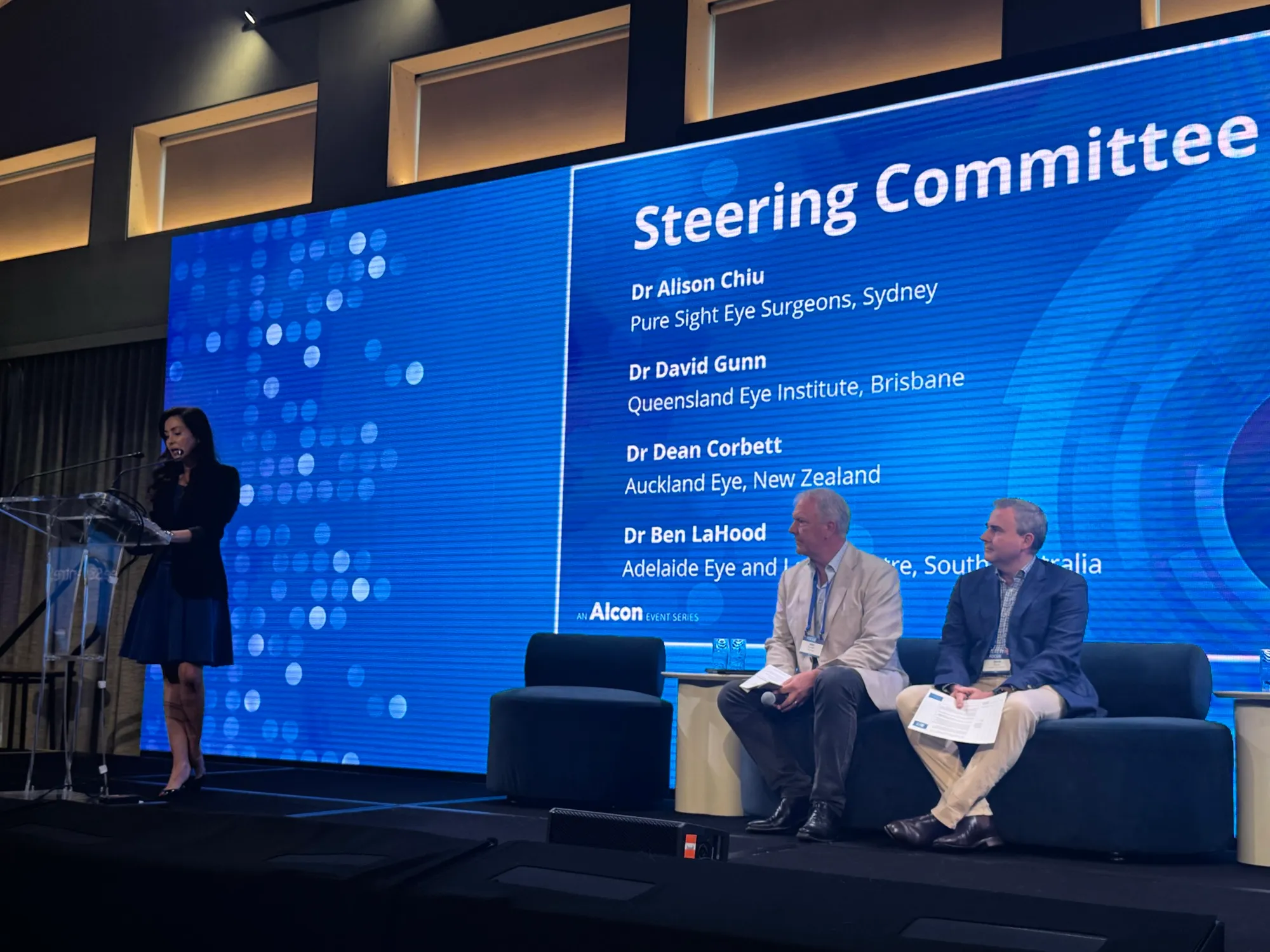
FOCUS is an Australasian cataract and refractive symposium run as an Alcon event series but built around a surgeon steering committee. The 2026 meeting was held on 21 March at 1 Hotel Melbourne in Docklands, and carried RANZCO accreditation for 4 Education and 1 Reviewing Performance hours.
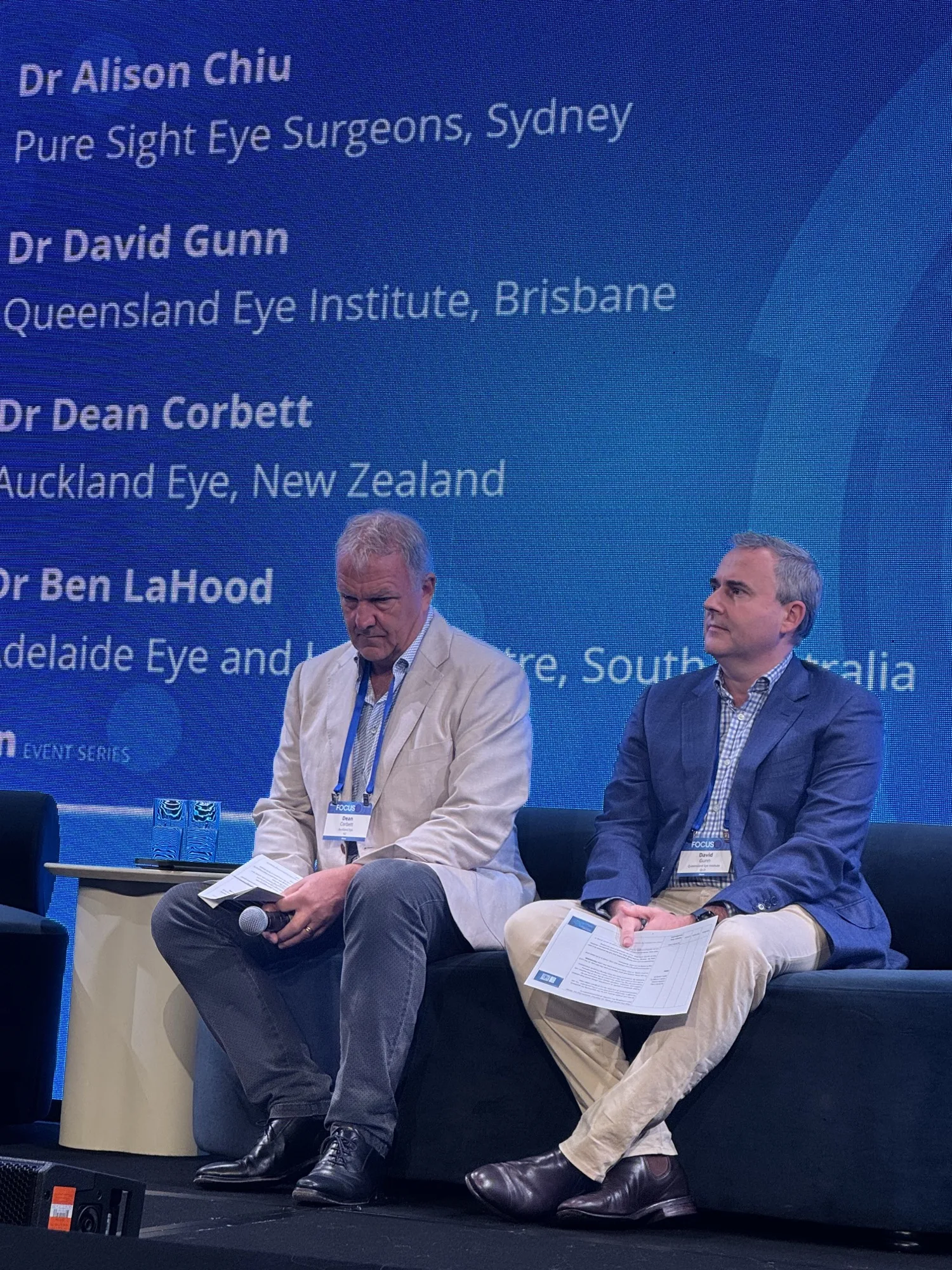
Dr David Gunn was on the steering committee alongside Dr Alison Chiu from Sydney, Dr Dean Corbett from Auckland and Dr Ben LaHood from Adelaide. He moderated Session 3 and stepped in to run Session 4.
Ray tracing, and where it earns its keep
The main presentation covered the Brisbane WaveLight Plus results.
Standard laser vision correction is planned from the spectacle prescription and a corneal map. Ray tracing goes further and models how light actually travels through the whole eye, including the internal optics, then designs a treatment for that specific optical system.
The result in a straightforward myopic eye is a small improvement. The result in an eye that is not optically average is often much larger. That covers patients with previous corneal surgery, unusual corneal shapes, and those whose corneal and internal astigmatism disagree with each other. In a practice that sees a lot of irregular corneas, that group is not a rounding error.
The caveat came with it: ray tracing does not rescue poor measurements. It makes good measurements more useful, and it makes bad measurements confidently wrong.
Early Clareon PanOptix Pro experience
At the symposium dinner Dr Gunn covered early experience with the Clareon PanOptix Pro.
The original PanOptix is a well-established trifocal, and the practical objection to it has always been the same: halos and starbursts at night in a proportion of patients. The Pro redistributes light across the diffractive structure to improve contrast and soften those effects.
Early experience is exactly that, and it was presented as such. A handful of months of cases is enough to describe how patients report the first weeks, and nowhere near enough to make claims about how it compares with the original lens over years. Anyone presenting a new intraocular lens as definitively better after one quarter of use is telling you more about their enthusiasm than about the lens.
The value of a surgeon-run programme
The value of a steering committee format is that the programme is set by people who will be in theatre the following week, and the discussion is allowed to be unflattering about technology when it deserves to be.
The most useful sessions at FOCUS were the ones about cases that did not go to plan: the trifocal patient who cannot tolerate their night vision, the post-refractive eye where the lens power calculation was off, the patient whose expectations were never realistically set. Those discussions change practice more than another set of good results does.
Two things that apply directly in clinic
The first is that lens choice is a decision about trade-offs, not a ranking. A trifocal buys spectacle independence and costs some night-time contrast. An extended depth of focus lens keeps cleaner night vision and usually means readers for small print. A monofocal set for distance is still an excellent operation for many people, and for some eyes it is the correct one.
The second is that the quality of the measurements and the accuracy of what the patient is told beforehand matter more than which premium lens is fashionable this year.
If you are considering cataract surgery or laser vision correction and want that discussion properly, book a consultation.
Frequently Asked Questions
What is the Clareon PanOptix Pro?
Does a trifocal lens mean no glasses after cataract surgery?
What is WaveLight Plus?
Does the technology a surgeon uses matter when choosing one?