Delivering the 2026 Cornea SA Lecture at the SASCRS Congress in Johannesburg
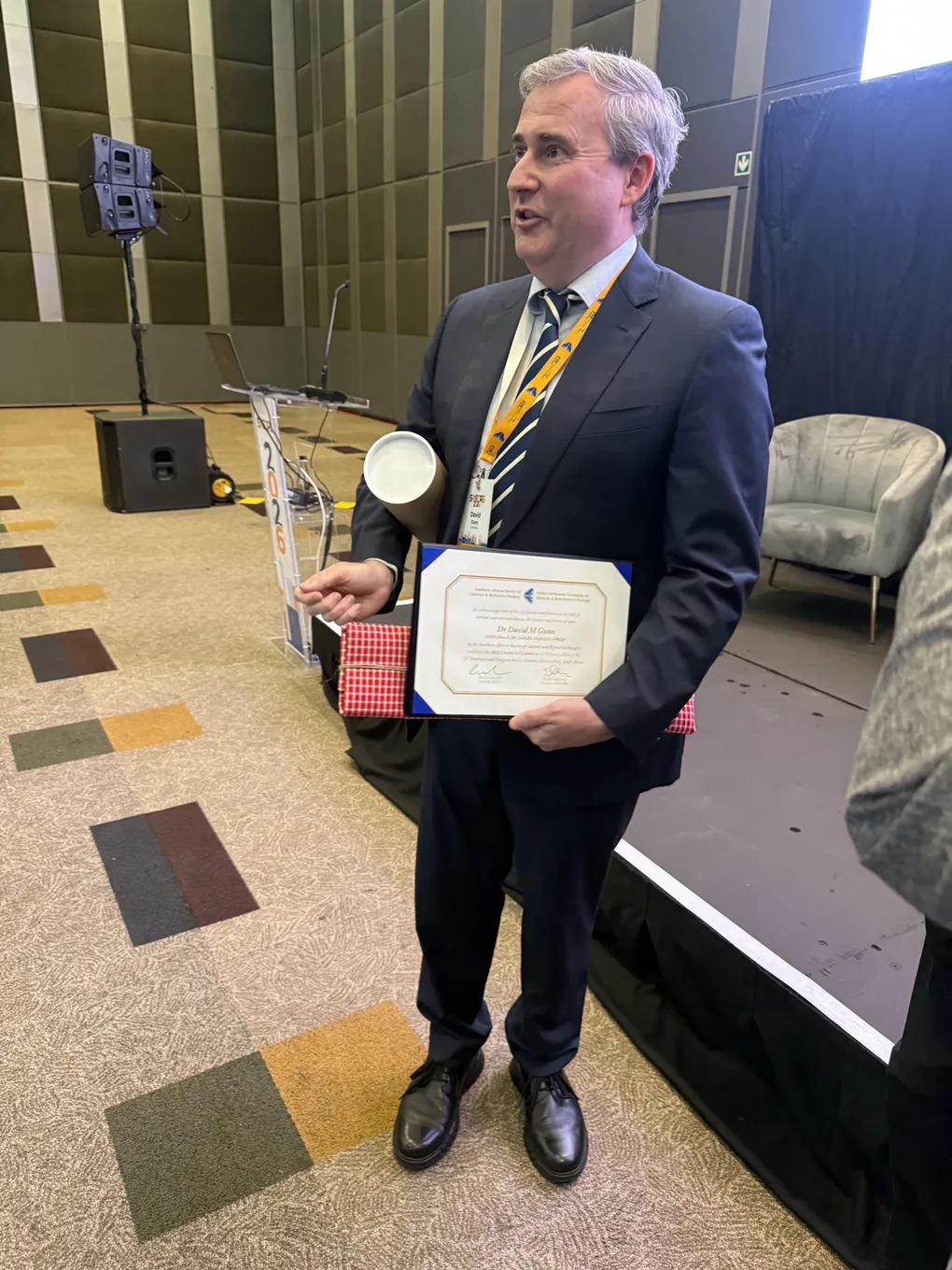
The 21st SASCRS International Congress ran from 12 to 15 February 2026 at the Sandton Convention Centre in Johannesburg. It is the Southern African Society of Cataract and Refractive Surgery’s biennial meeting and the main gathering point for anterior segment surgery across the region.
Dr David Gunn was invited to deliver the 2026 Cornea SA Lecture, given on 13 February. He also took the congress Top Tips Champion prize.
The lecture
Named lectures are awarded rather than applied for, and the citation on this one is for contributions to the field of corneal and external disease. The subject was the argument Dr Gunn has been making at meetings for five years: that CAIRS changes the treatment algorithm for keratoconus and corneal ectasia rather than adding another option at the end of it.
The conventional sequence has been cross-linking to halt progression, contact lenses for as long as they are tolerated, and a corneal transplant when they are not. Ring segments made from donor corneal tissue sit in the gap that sequence leaves, which is the large group of patients whose disease is stable but whose cornea is too distorted to see well through.
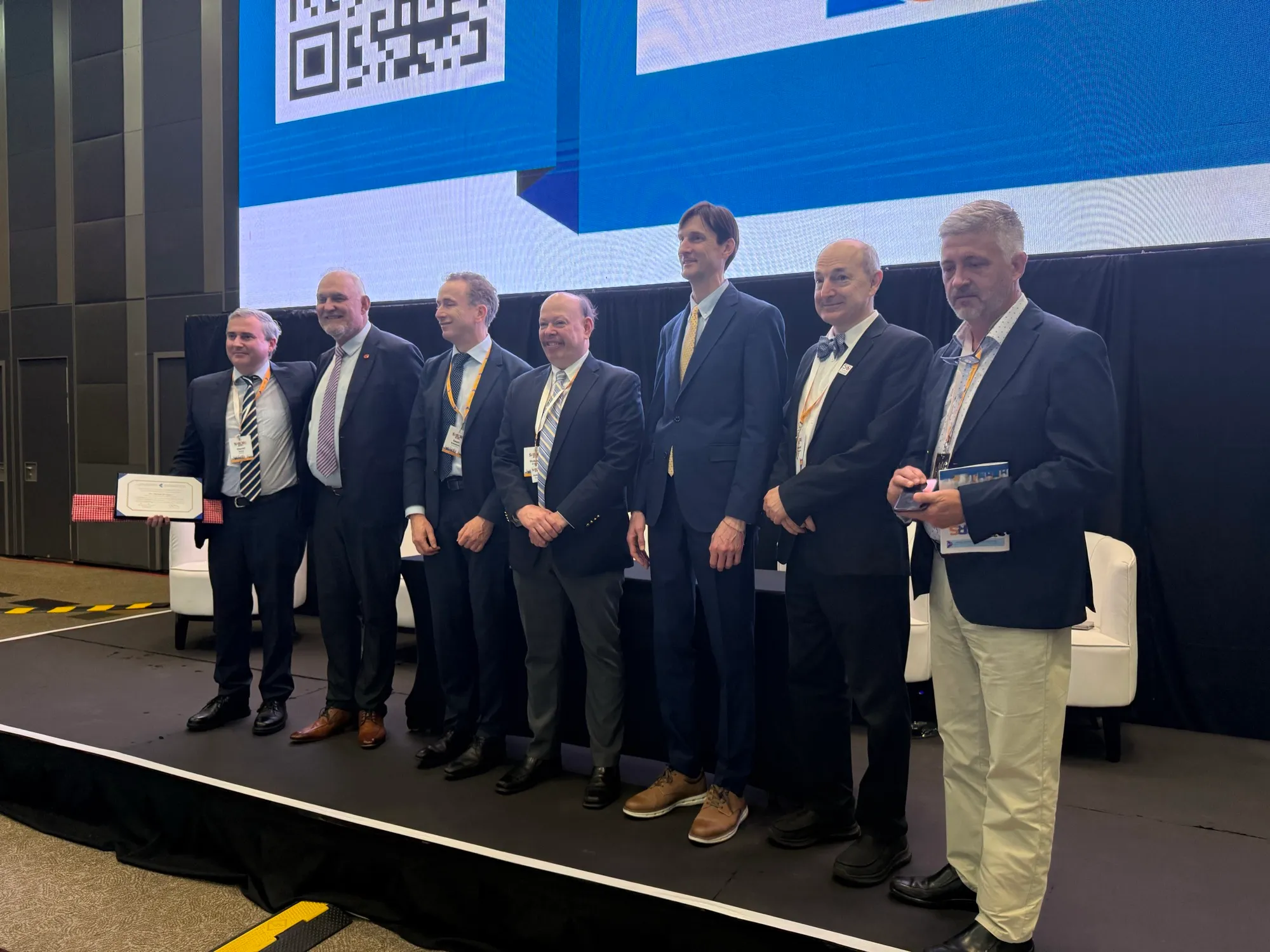 Dr Gunn (far left) with congress faculty after the Cornea SA Lecture, Sandton Convention Centre, 13 February 2026.
The wet lab
Dr Gunn also led the Lions World Vision Institute wet lab on CAIRS and OptiGraft tissue.
Wet labs are where a technique actually transfers. A lecture explains why an operation works. A wet lab is where a surgeon holds a segment for the first time, discovers how it behaves as it goes into a channel, and finds out that the awkward part is not the part they expected.
A room of South African corneal surgeons crossed that line in a single morning. Several will be doing the operation independently within the year, in a region where keratoconus presents commonly and often late.
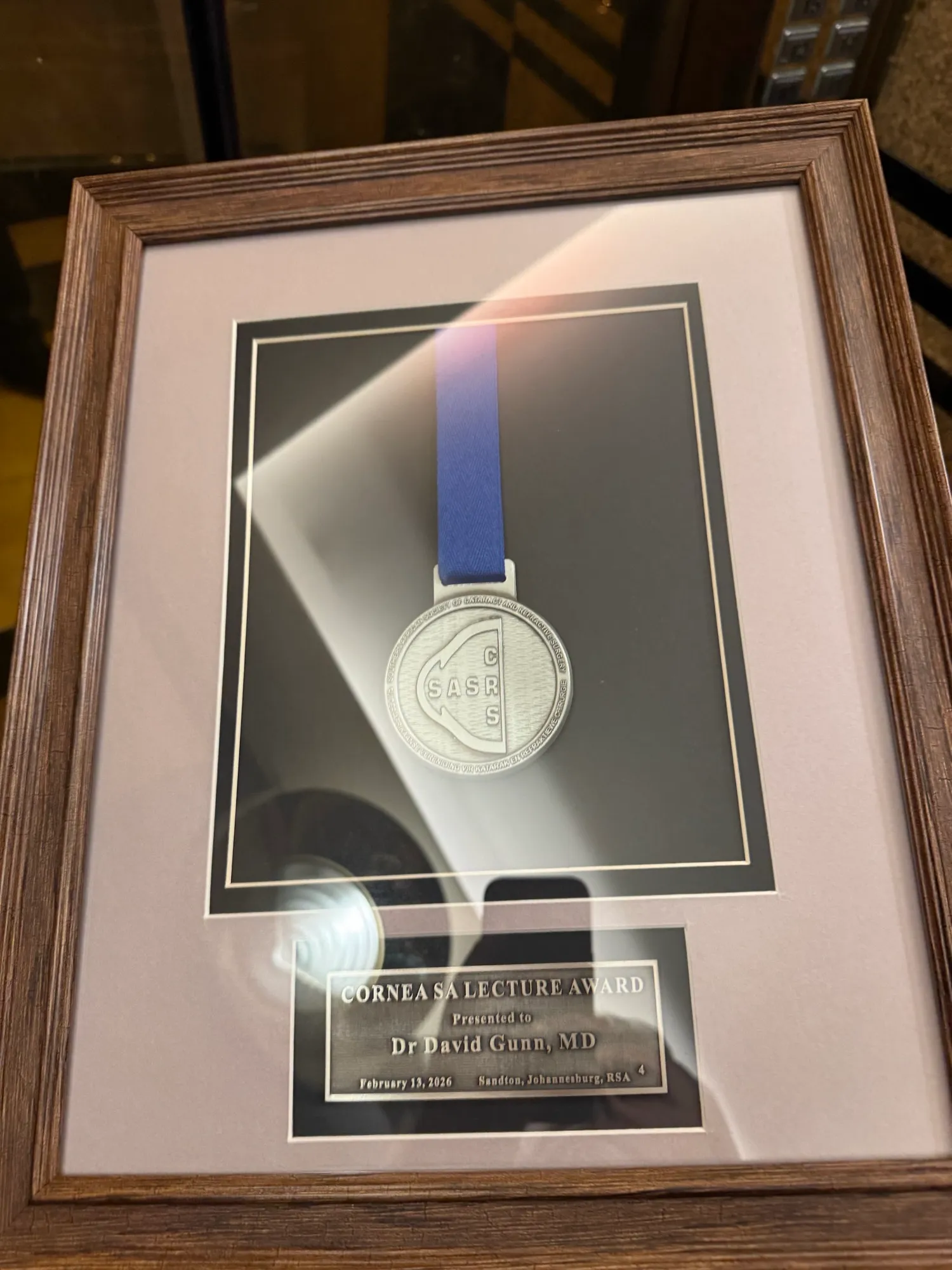 The Cornea SA Lecture Award, presented at the 21st SASCRS International Congress on 13 February 2026.
Ray tracing on the refractive side
The other half of the programme was refractive rather than corneal: outcomes from ray-traced WaveLight Plus laser vision correction.
Ray tracing builds the treatment from a model of how light travels through the individual eye rather than from the spectacle prescription. In an average eye the difference is modest. In an eye that is not average, which includes many of the corneas a keratoconus practice deals with, it is the difference between a treatment designed for that eye and a treatment designed for a typical one.
Top Tips
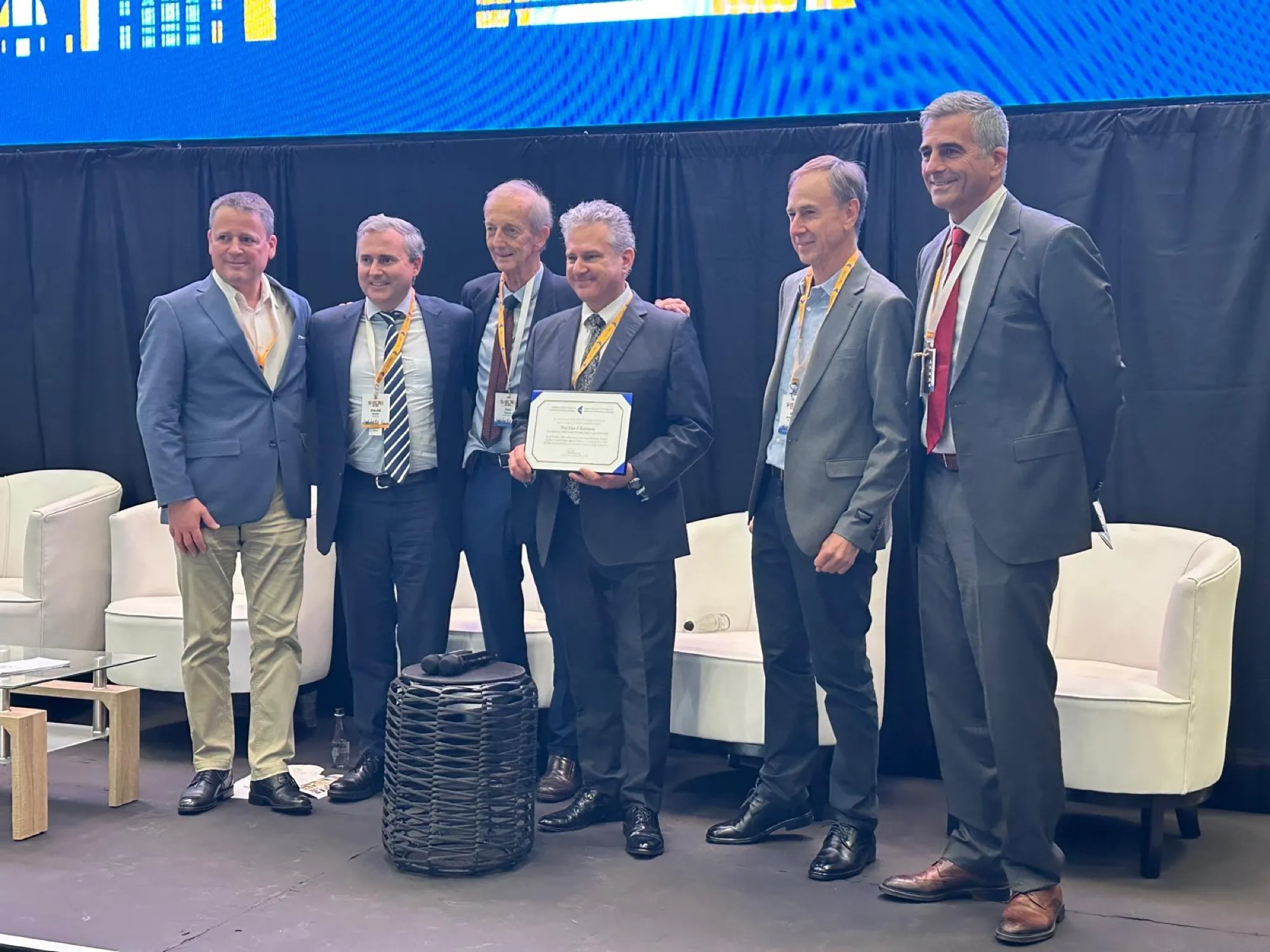
The congress also runs a Top Tips session, where faculty each give one practical tip and the room votes on which was the most useful. It is the least formal item on any refractive programme and often the most watched, because a tip that survives an audience of surgeons is one they intend to use on Monday.
Dr Gunn’s tip took 27% of the 124 votes cast, ahead of Uday Devgan on 18%, Roberto Pineda on 12%, Brian Harrisberg on 10%, Sean Edelstein on 7% and Marie-José Tassignon on 6%, with Dan Reinstein also in the field. The Top Tips Champion prize is a medal.
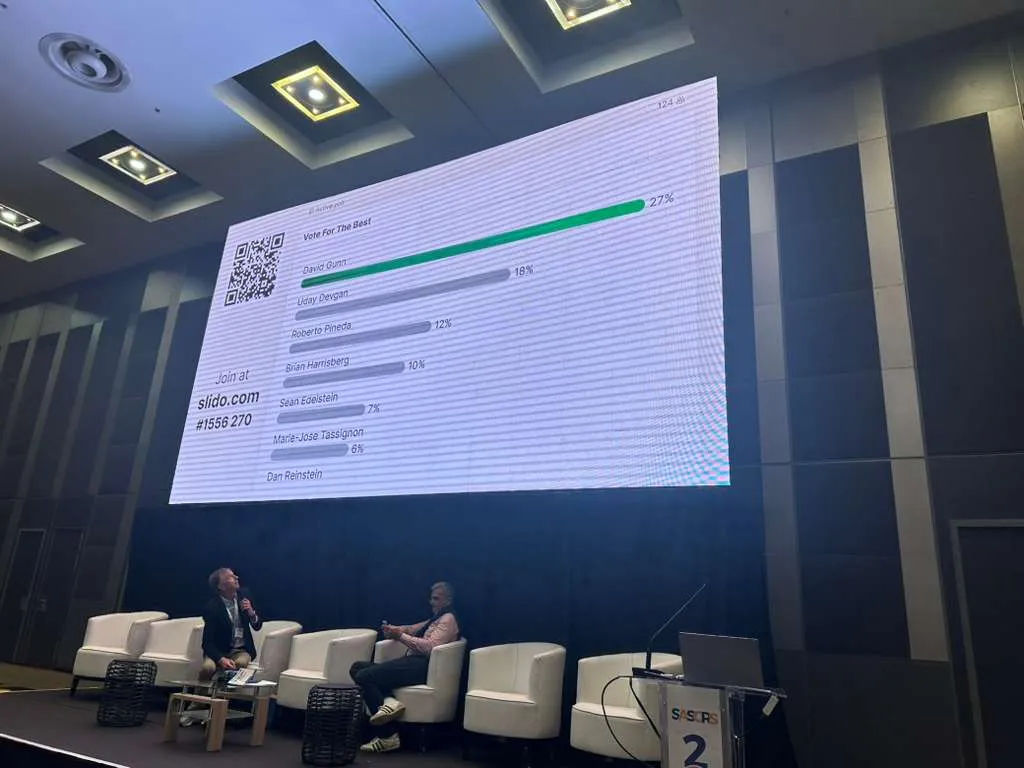 The audience vote at the close of the Top Tips session, 21st SASCRS International Congress, February 2026.
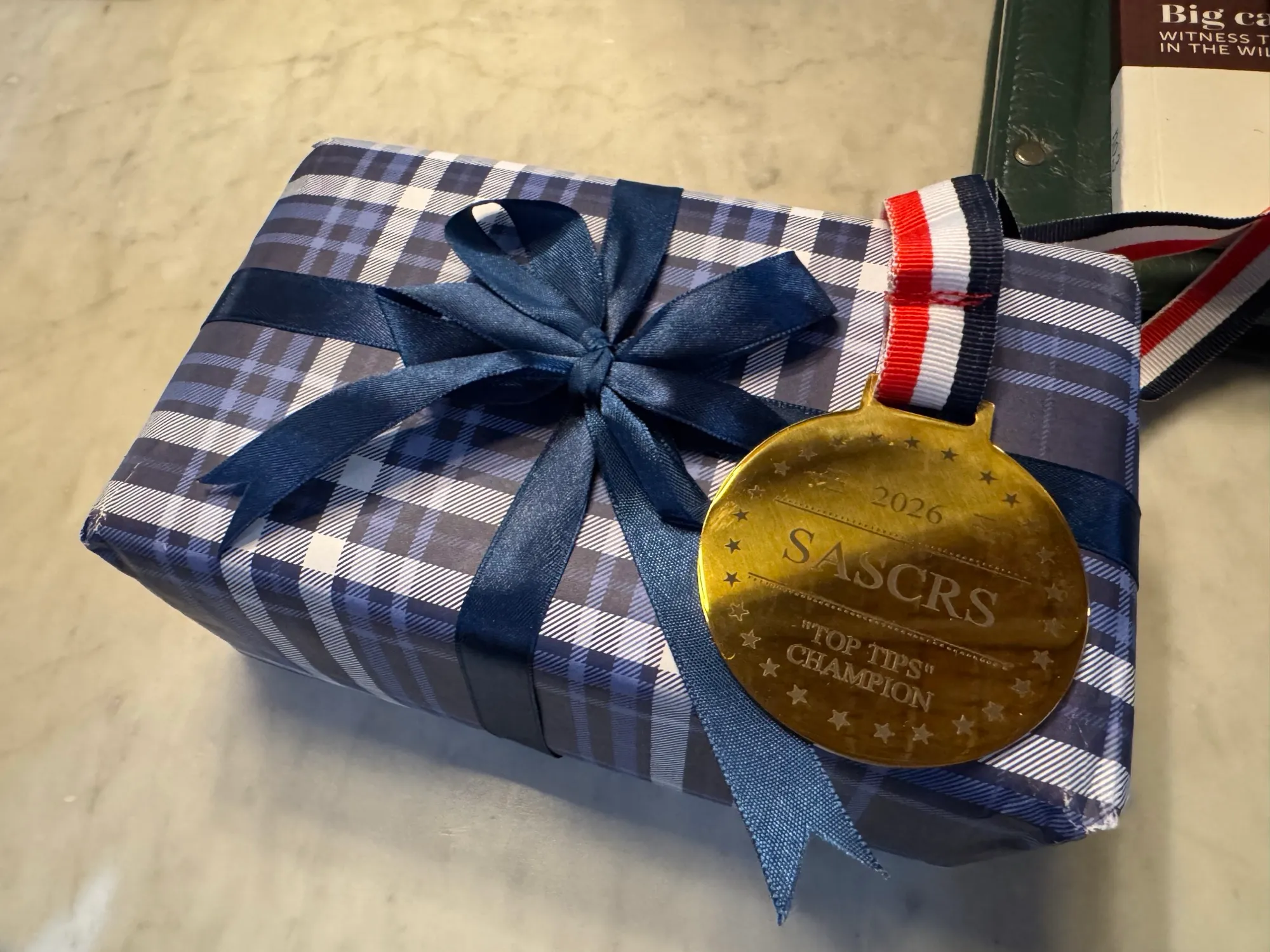 The medal, engraved 2026 SASCRS “Top Tips” Champion.
Why the work came out of Australia
Australia is a small market for corneal surgery and an unlikely place for a technique to be developed. What the Brisbane group has had since 2021 is continuity: the same team, the same planning tools, and a series followed properly rather than reported once and abandoned.
That is the same body of work patients in Brisbane are drawing on when they come in for an assessment.
If you have keratoconus or corneal ectasia, book a consultation to find out where your cornea sits.
Frequently Asked Questions
What is the Cornea SA Lecture?
What happens in a CAIRS wet lab?
Why does teaching CAIRS overseas matter to patients in Australia?
What is ray-traced laser vision correction?