Femto-CAIRS for Corneal Ectasia: The Brisbane Series at ESCRS Barcelona 2024
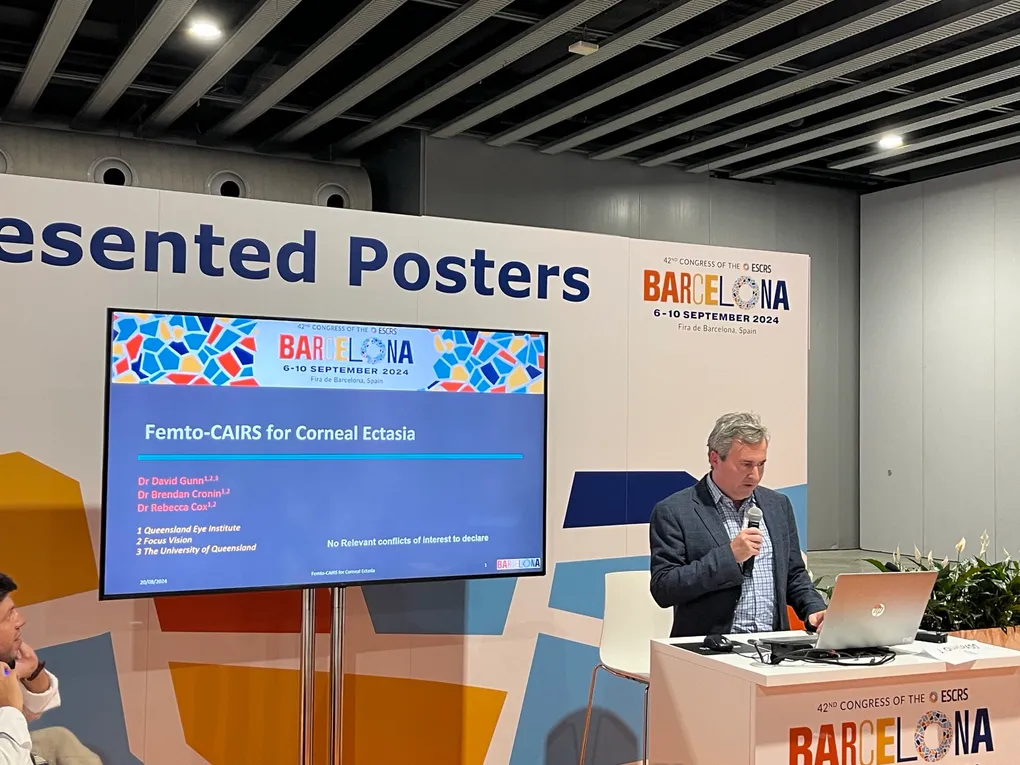
The 42nd ESCRS Congress ran from 6 to 10 September 2024 at Fira de Barcelona Gran Via, with total attendance of 16,247 and more than three hundred exhibitors. It is the busiest meeting in the anterior segment calendar and the one where a technique either holds up under questioning or does not.
Dr David Gunn had two abstracts in the presented poster pods.
Femto-CAIRS for corneal ectasia
The first was Femto-CAIRS for Corneal Ectasia, by Dr Gunn, Dr Brendan Cronin and Dr Rebecca Cox, from the Queensland Eye Institute, Focus Vision and the University of Queensland.
By 2024 the Brisbane series had moved past reporting whether the operation worked and into the harder question of who it works best for. The series covered eyes with keratoconus and eyes with ectasia after previous laser vision correction, treated with donor ring segments placed in a femtosecond-created channel.
Two findings shaped how cases are now planned. Segment placement relative to the cone matters more than segment thickness within the usual range, which is the opposite of the intuition most surgeons start with. And post-refractive ectasia responds differently to virgin keratoconus, so applying a keratoconus nomogram to a post-LASIK cornea and expecting the same flattening is a mistake.
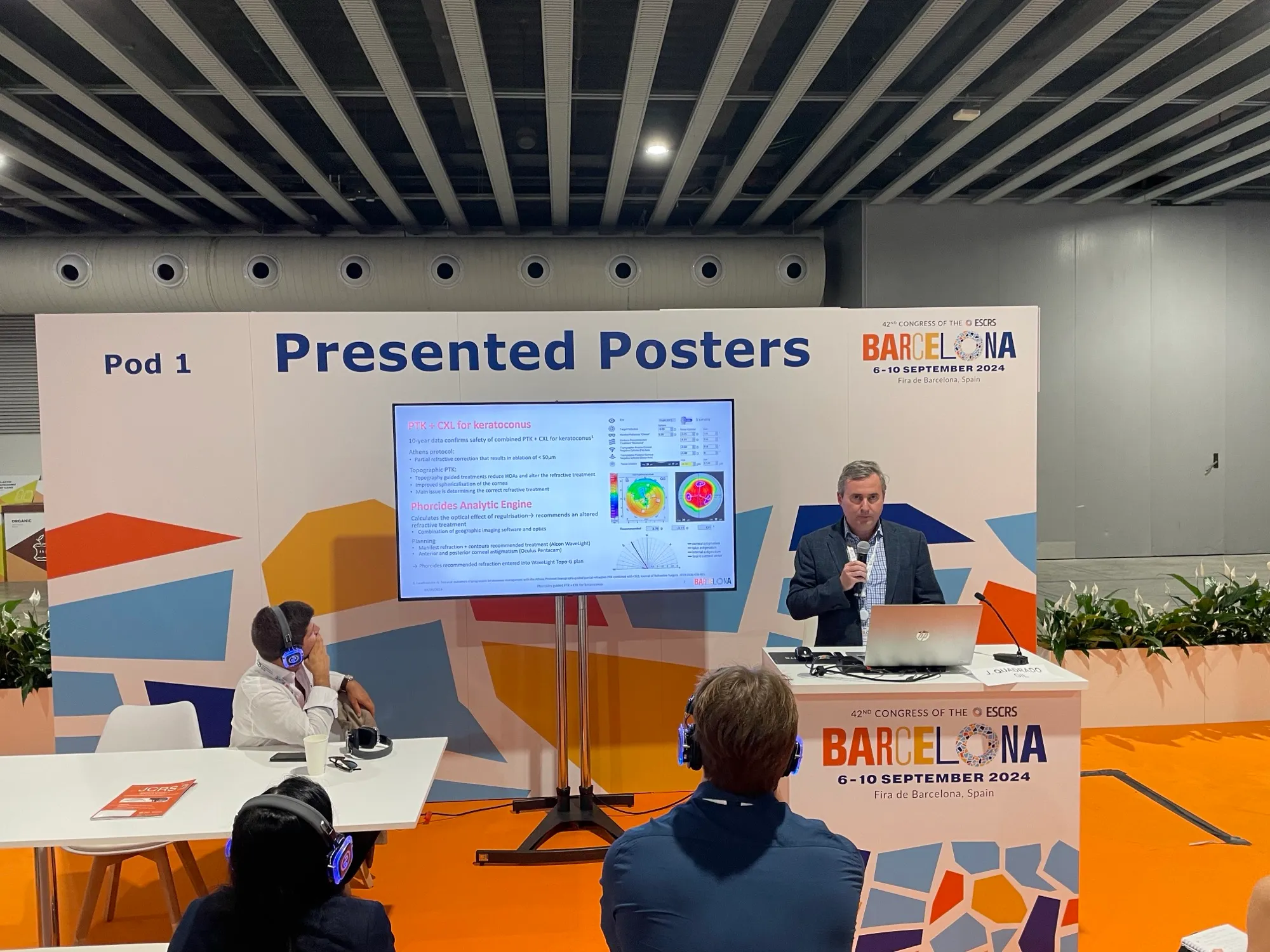
Phorcides-guided PTK with cross-linking
The second pod talk continued the work first presented in Milan two years earlier: topography-guided phototherapeutic keratectomy combined with cross-linking for keratoconus, now with a longer follow-up.
The pattern in the data was reassuringly dull, which in this field is what you want. Corneas treated with a deliberately conservative laser plan alongside cross-linking held their improvement, and the eyes that did least well were the ones where the cone sat too close to the visual axis for the laser to help much. That is a selection problem rather than a technique problem, and it is now built into how candidates are assessed.
Instructional course faculty again
Dr Gunn also returned to the CAIRS instructional course faculty. The change from Vienna the previous year was noticeable. Fewer surgeons in the room were considering starting, and more had already started and wanted to talk about their difficult cases, which is a better class of question and considerably harder to answer.
The exhibition floor is where the planning gets better
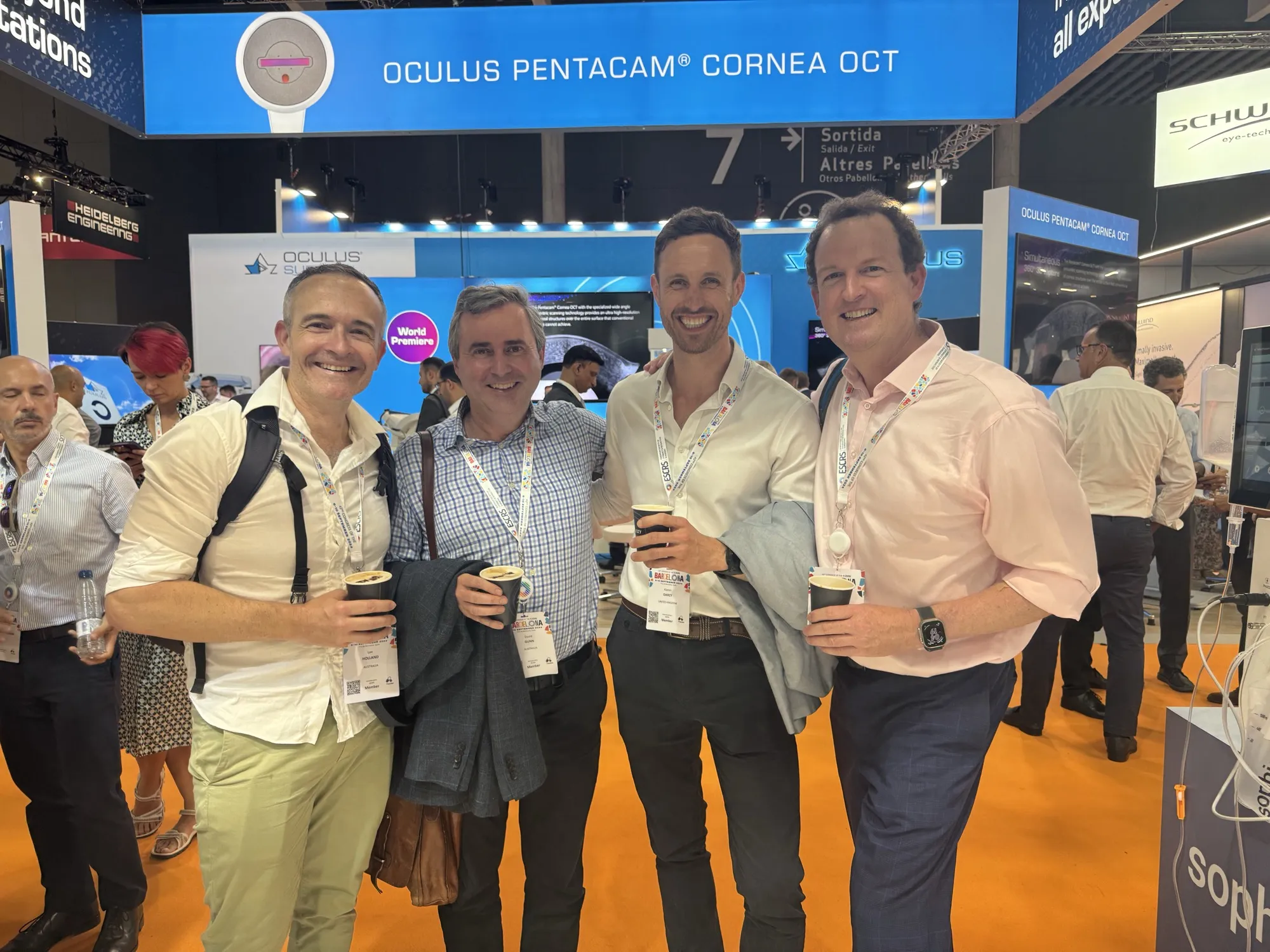
A congress this size has an exhibition floor full of tomography and anterior segment OCT devices, and it is worth walking properly rather than treating it as a coffee stop.
Everything in CAIRS planning depends on the quality of the corneal map you start from. Better elevation data and better epithelial thickness mapping change what you can plan, and the equipment on those stands in 2024 is what made the automated planning work presented the following year possible at all.
For patients
If you have keratoconus, or your cornea has become unstable after laser eye surgery elsewhere, the assessment is the same: corneal tomography, epithelial mapping and a review of how the shape has changed over time. From that it is possible to say whether cross-linking alone is enough, whether laser regularisation is safe, or whether ring segments are the better answer.
Book a consultation to have that assessed.
Frequently Asked Questions
What is corneal ectasia?
How is CAIRS used for ectasia after laser surgery?
Will CAIRS mean I no longer need glasses?
Is CAIRS reversible?