Awarded the IIRSI Gold Medal in Chennai for Contributions to Ophthalmology
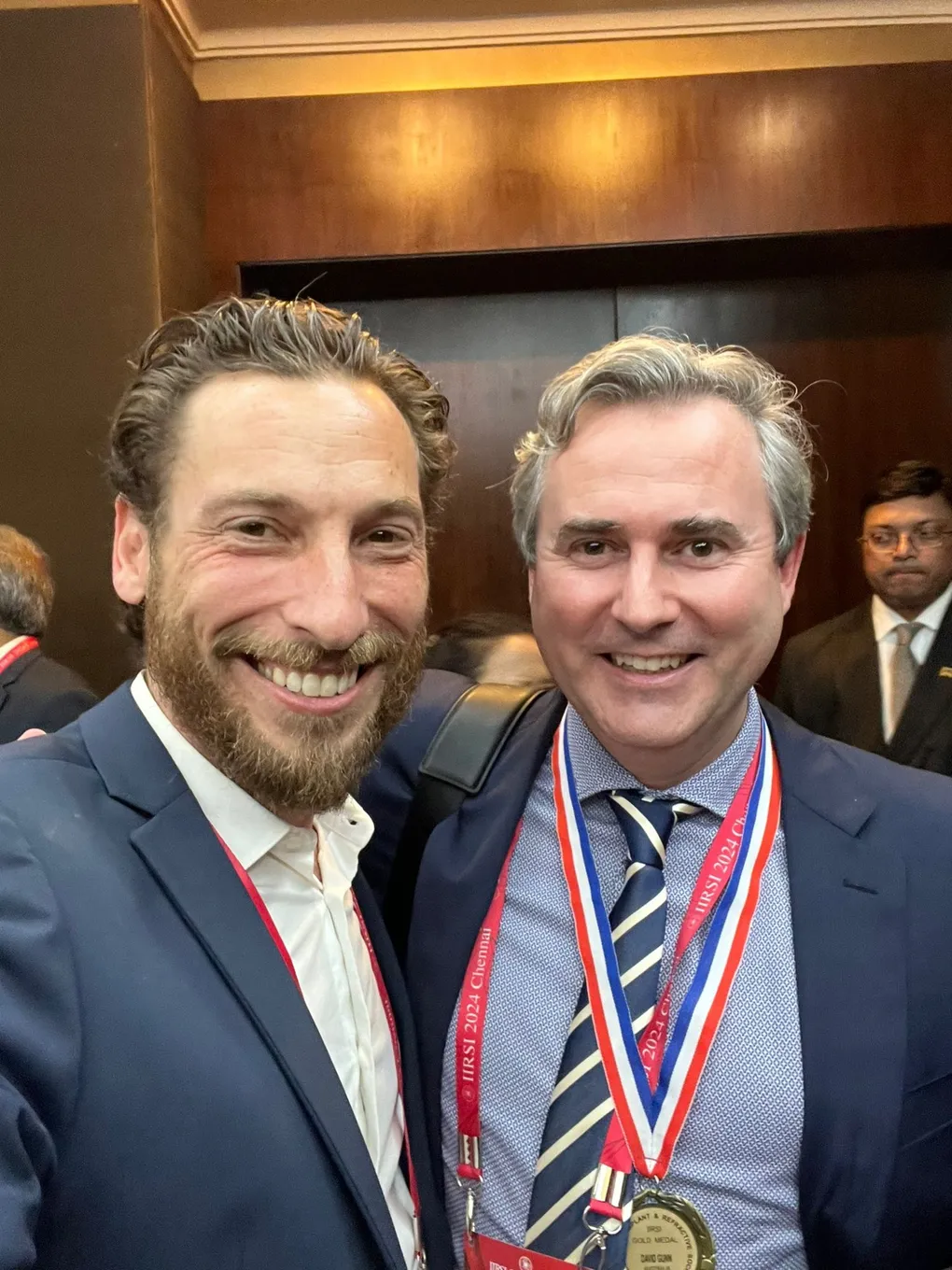
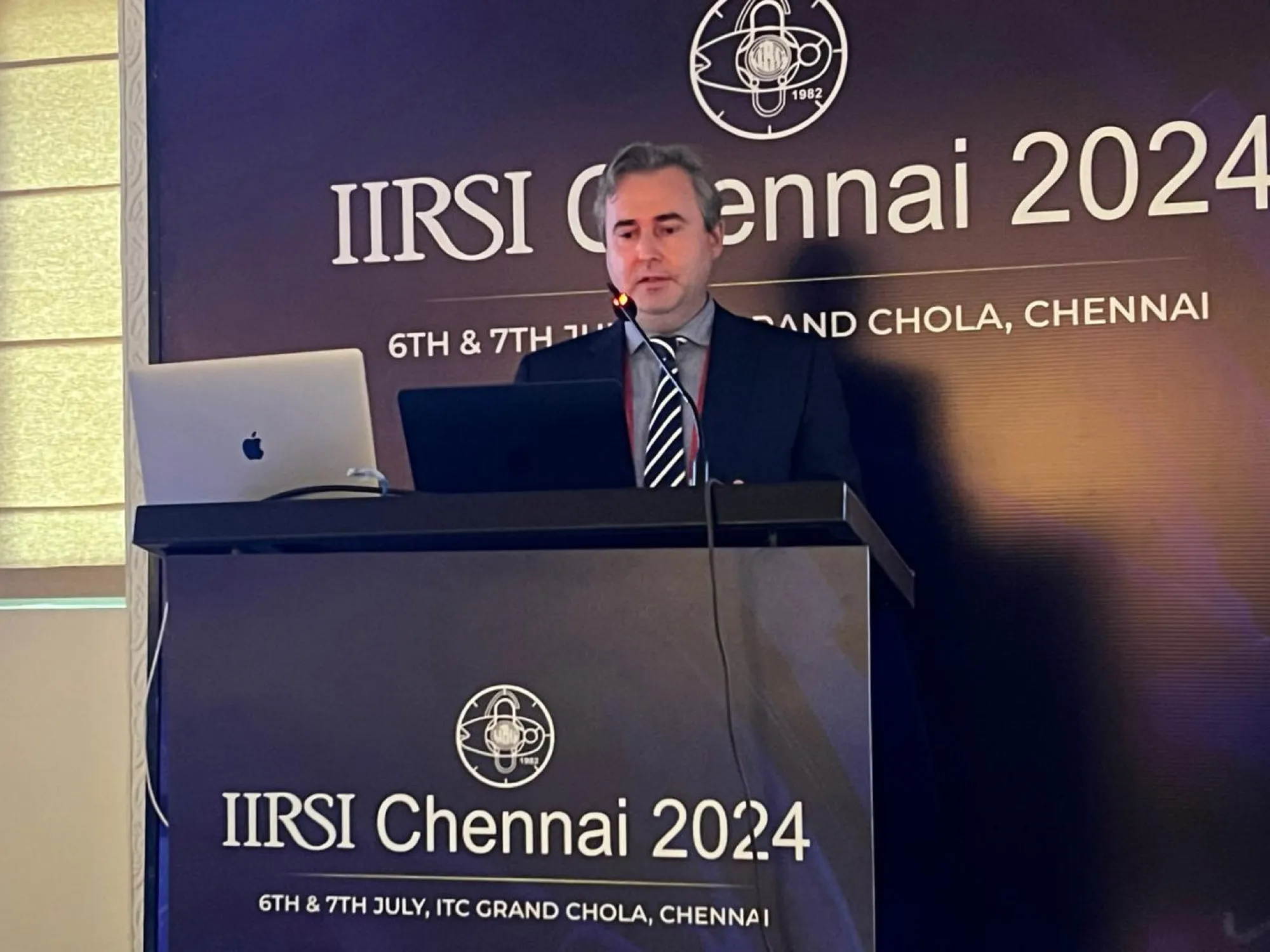
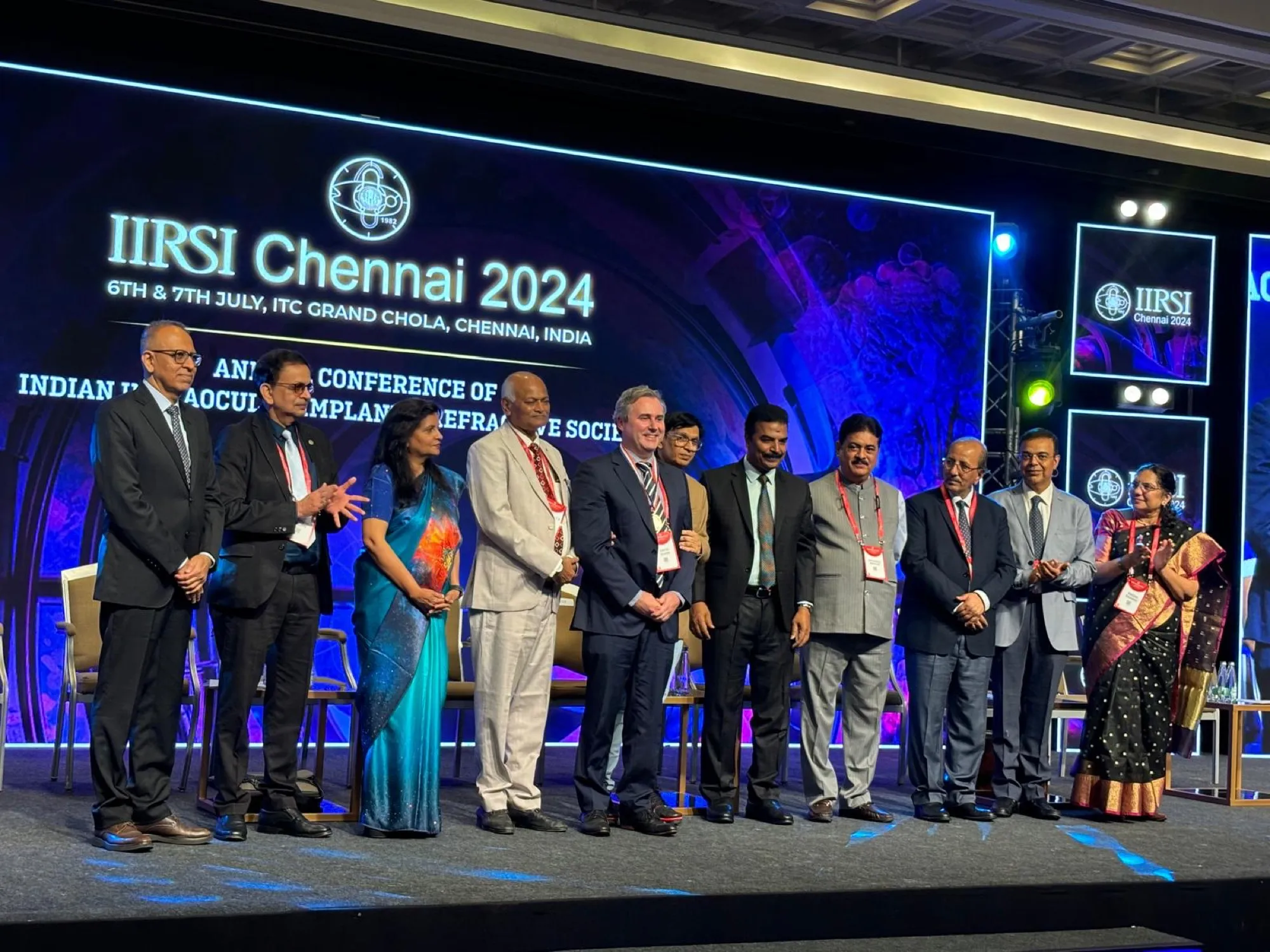
IIRSI has been running since 1982, and its annual convention is now one of the larger ophthalmic meetings anywhere. The 2024 edition ran on 6 and 7 July at the ITC Grand Chola in Chennai, with more than four thousand ophthalmologists, around fifty invited speakers, live surgery, wet labs and a film festival.
Dr David Gunn was there as invited international faculty, and was awarded the IIRSI Gold Medal for contributions to ophthalmology.
Presenting CAIRS back to the country that invented it
CAIRS was first described by Dr Soosan Jacob in India. Every surgeon now performing the operation, in Brisbane or anywhere else, is building on work that started there.
Presenting Australian outcomes a few hundred kilometres from where the technique was first described also meant a well-informed audience. A CAIRS talk in Europe spends a fair amount of time explaining the principle. In Chennai that part was skipped and the session went straight to the arguments.
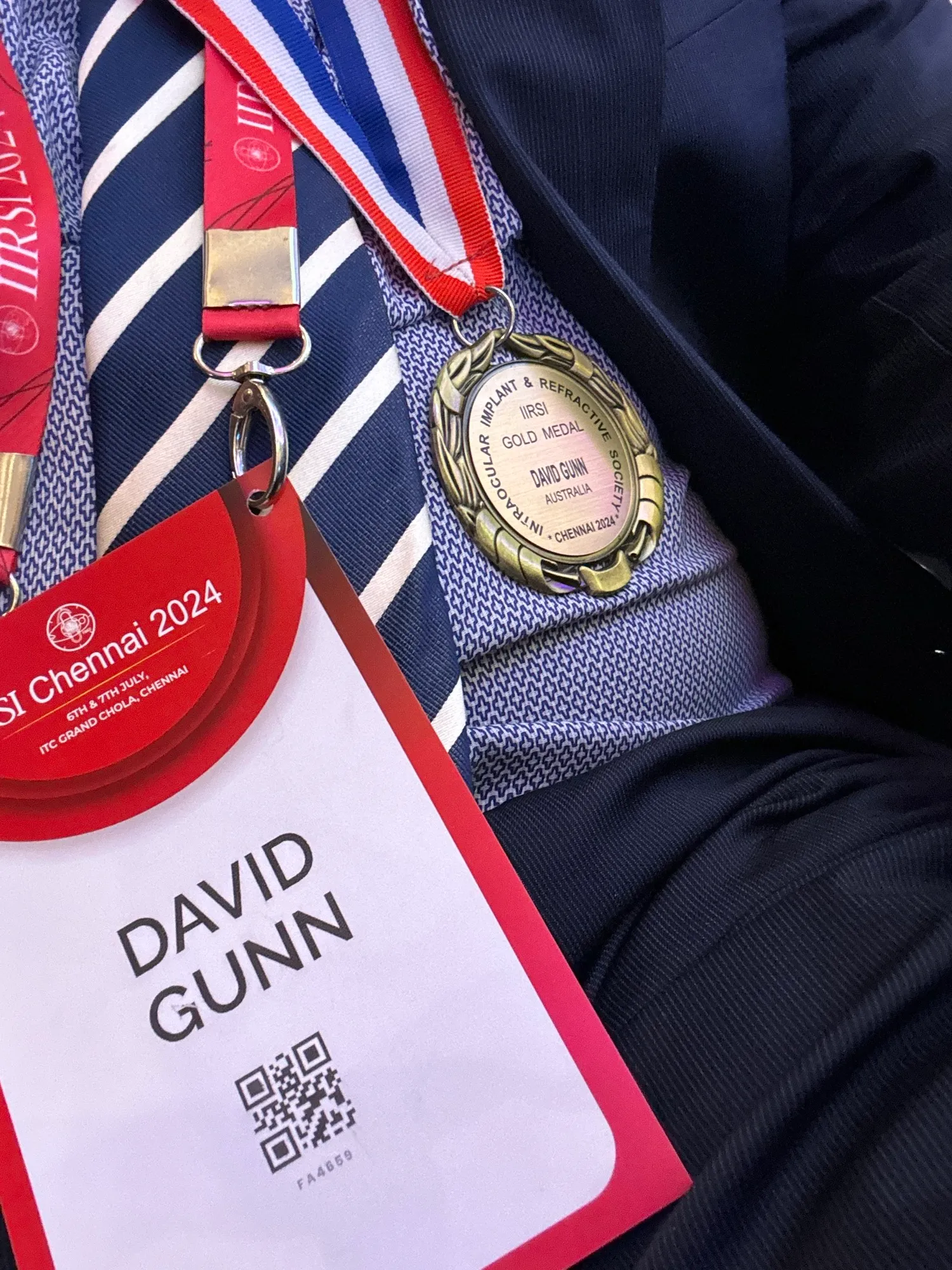 The medal is inscribed “IIRSI Gold Medal — David Gunn, Australia — Chennai 2024”.
Four talks across the meeting
FemtoCAIRS. Where laser-created channels had taken the operation, and what the technique now looks like when it has been standardised enough to teach.
The CAIRS Multiverse. A survey of how differently the operation is being done around the world. Segment number, thickness, arc length, channel depth and whether to combine with cross-linking all vary between centres, and nobody yet knows which combinations suit which cone. That is more useful to say out loud than to present a single house protocol as settled fact.
WaveLight Plus outcomes. Early Queensland results with ray-traced laser vision correction, which plans treatment from a model of how light passes through the individual eye rather than from the spectacle prescription.
Topography-guided transepithelial cross-linking. Results from the epithelium-on cross-linking protocol used in Brisbane, where the surface layer is left intact and oxygen supplementation with pulsed ultraviolet light is used to keep the reaction working. For patients this is the difference between three to five days of significant pain and a mildly gritty eye for a day or two.
What travels well between countries, and what does not
Two things stood out from the week.
The first is that surgical technique transfers easily. Show a room of experienced corneal surgeons a channel depth and a segment plan and they will be doing it competently within a handful of cases.
The second is that patient selection does not transfer nearly as well. Keratoconus in an Indian clinic often presents younger, steeper and further progressed than the same disease does in Brisbane. A nomogram developed on Australian corneas is a starting point there, not an answer. That is a large part of why Dr Gunn and Dr Brendan Cronin built CAIRSPlan as a planning tool rather than publishing a fixed table.
Back home
The treatments discussed in Chennai are the ones offered in Brisbane for keratoconus: epithelium-on cross-linking to stop progression, topography-guided laser to improve an irregular surface, and CAIRS where the cone needs structural support. Which one applies depends on your tomography, your corneal thickness and how fast the disease is moving.
Book an assessment if you want that worked out properly.
Frequently Asked Questions
What is the IIRSI Gold Medal?
Why is India significant in keratoconus surgery?
What is transepithelial cross-linking?
What is WaveLight Plus?