Australia's First Apple Vision Pro-Assisted Surgery, Performed in Brisbane
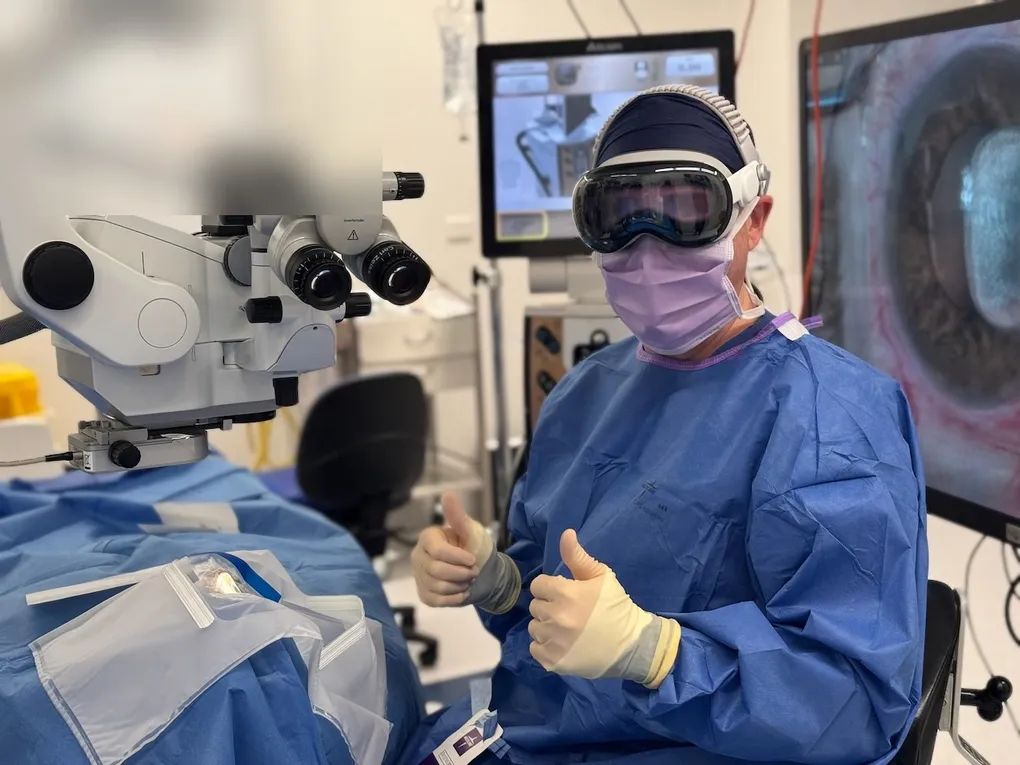
On a Monday morning in a Brisbane operating theatre, Dr David Gunn began his surgical list wearing an Apple Vision Pro headset, with the live feed from the theatre’s 3D camera displayed in front of him.
By early afternoon on 24 August 2026 he had completed a combined cataract and corneal transplant, an all-femtosecond CAIRS procedure for keratoconus, and cataract surgery with multifocal lenses, all viewed through the headset. No Apple Vision Pro-assisted surgery had previously been reported in Australia, in any specialty.
Insight, the Australian ophthalmic industry journal, reported the cases on 28 August 2026: Apple Vision Pro enters the operating theatre in Australian ophthalmology first.
Two of the three cases appear to be firsts well beyond Australia. Every eye procedure reported in the headset to date, anywhere, has been cataract surgery; a corneal transplant and a CAIRS procedure performed this way have not been reported before.
Three operations, one headset
The list was chosen deliberately. Cataract surgery with a multifocal lens is high-volume, precise work. DMEK, the modern form of corneal transplantation that replaces a single cell layer thinner than cling film, is delicate tissue handling under high magnification. And CAIRS, the keratoconus procedure Dr Gunn was first to perform in Australia in 2021, involves a femtosecond laser cutting both the corneal channels and the donor tissue segments to plans generated in CAIRSPlan, the planning platform he co-developed with Dr Brendan Cronin.
Three quite different visual tasks, and a fair test of whether the headset can support a working cornea practice.
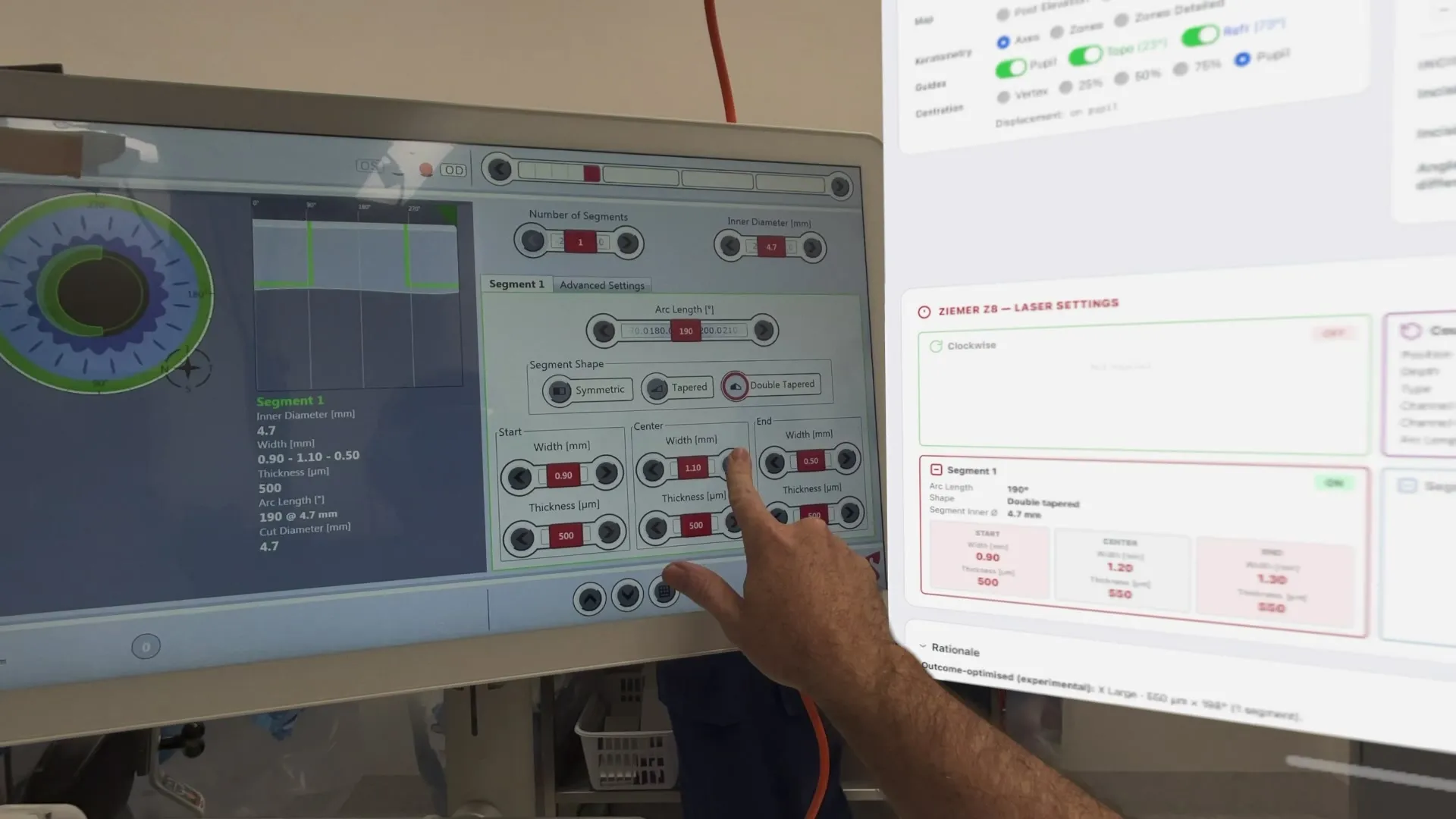
In the photograph above, Dr Gunn is programming the Ziemer Z8 femtosecond laser for the CAIRS case. Floating to the right of the machine, visible only through the headset, is CAIRSPlan’s laser settings panel showing the planned segment: 190 degrees of arc, double tapered, 4.7 mm inner diameter. The plan and the laser console sit side by side in his view as the settings are entered, where previously that meant looking between the laser and a printout or a wall screen.
The most useful moment of the CAIRS case came mid-procedure. Still scrubbed and sterile, Dr Gunn brought the patient’s topography scans up in the headset, reviewed the outcome of the fellow eye treated previously, and updated the segment plan live before continuing. That level of clinical connectedness has not been available in an operating theatre until now. The usual alternative is to unscrub, find a laptop, open the notes, search for the data, and then scrub back in.
How the surgical view reaches the headset
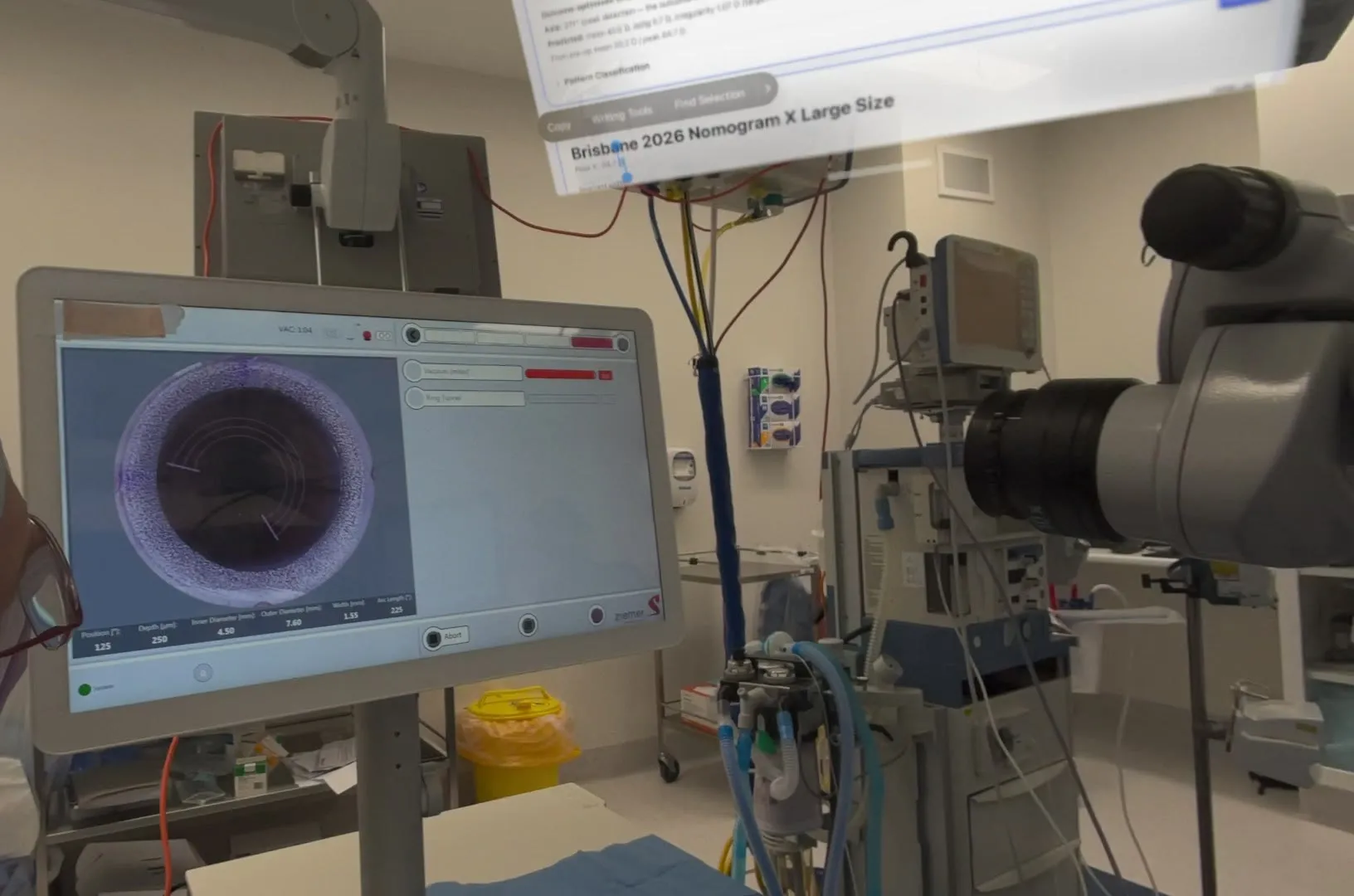
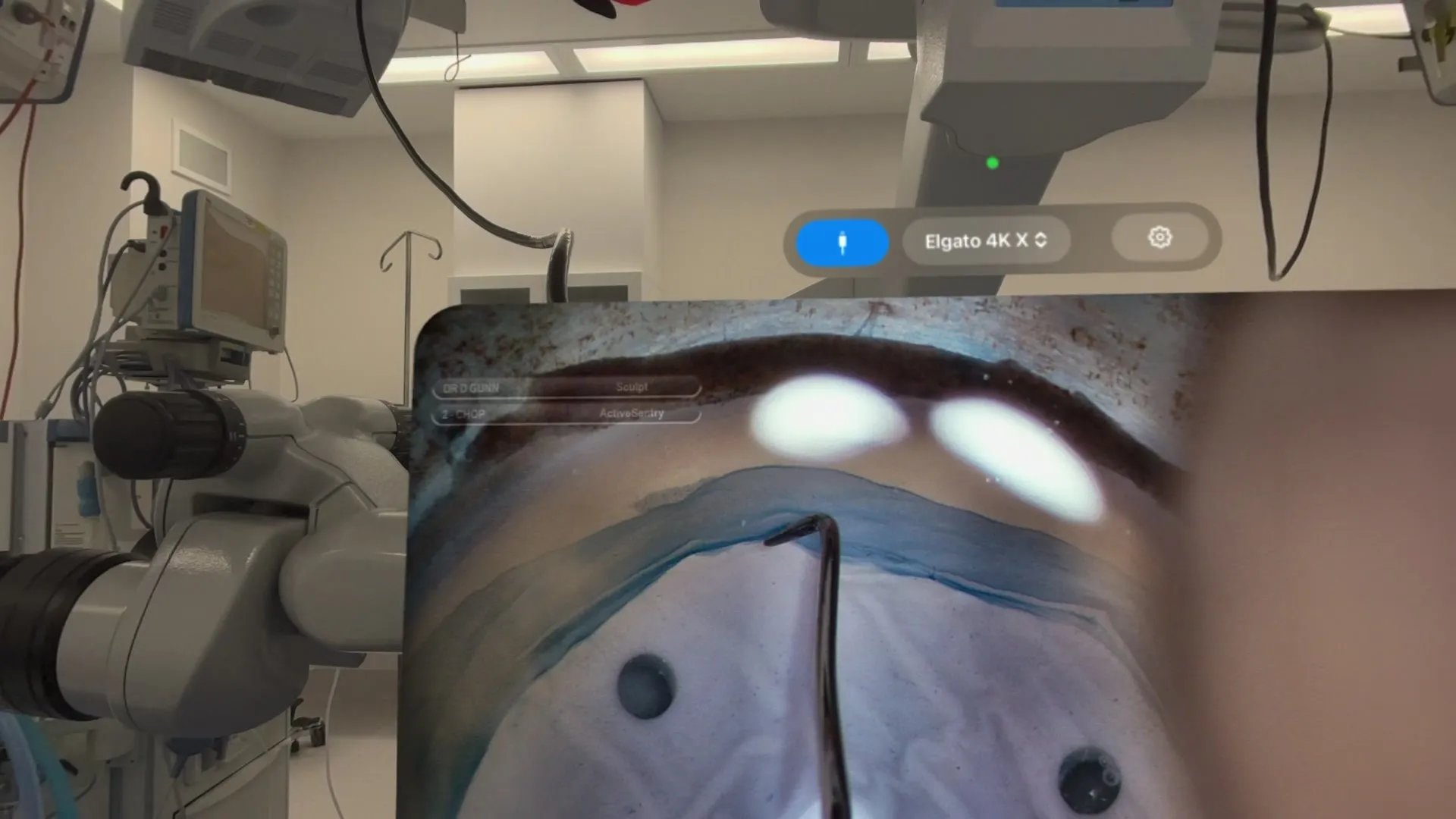
The Alcon NGENUITY 3D camera, the same digitally assisted visualisation system Dr Gunn used for Asia-Pacific’s first heads-up 3D LASIK in July, films the eye through the microscope optics. Its output runs through a capture device into the headset’s Developer Strap, and an app called ScopeXR displays it as a stereoscopic 3D window that the surgeon can place anywhere, at any size.
Around that main surgical window, the Vision Pro can pin whatever else is useful: the patient’s topography maps, the surgical plan, the laser nomogram. The headset’s own cameras pass the real theatre through to the wearer the whole time, so the scrub nurse, the instruments and the patient stay in plain view.
Support from New York
The world’s first surgeon to operate through an Apple Vision Pro on an eye was Dr Eric Rosenberg of SightMD in New York, who performed cataract surgery through the headset in October 2025 and has completed hundreds of cases since. He also co-developed ScopeXR.
Dr Gunn thanks Dr Rosenberg for his support of these cases. He generously sent over the Apple Developer Strap and capture cables, which are not available in Australia, together with access to the ScopeXR software.
What the headset improves
Ask any ophthalmic surgeon about their neck. Operating through a microscope means holding the same flexed posture for hours, list after list, year after year, and musculoskeletal pain is a recognised occupational hazard of the profession. Heads-up 3D surgery on a display was the first answer; Dr Gunn’s July LASIK cases showed how well that works. The headset goes further: the screen sits exactly where the surgeon wants it, at whatever size, with no fixed display to crane towards and no 3D glasses to keep aligned.
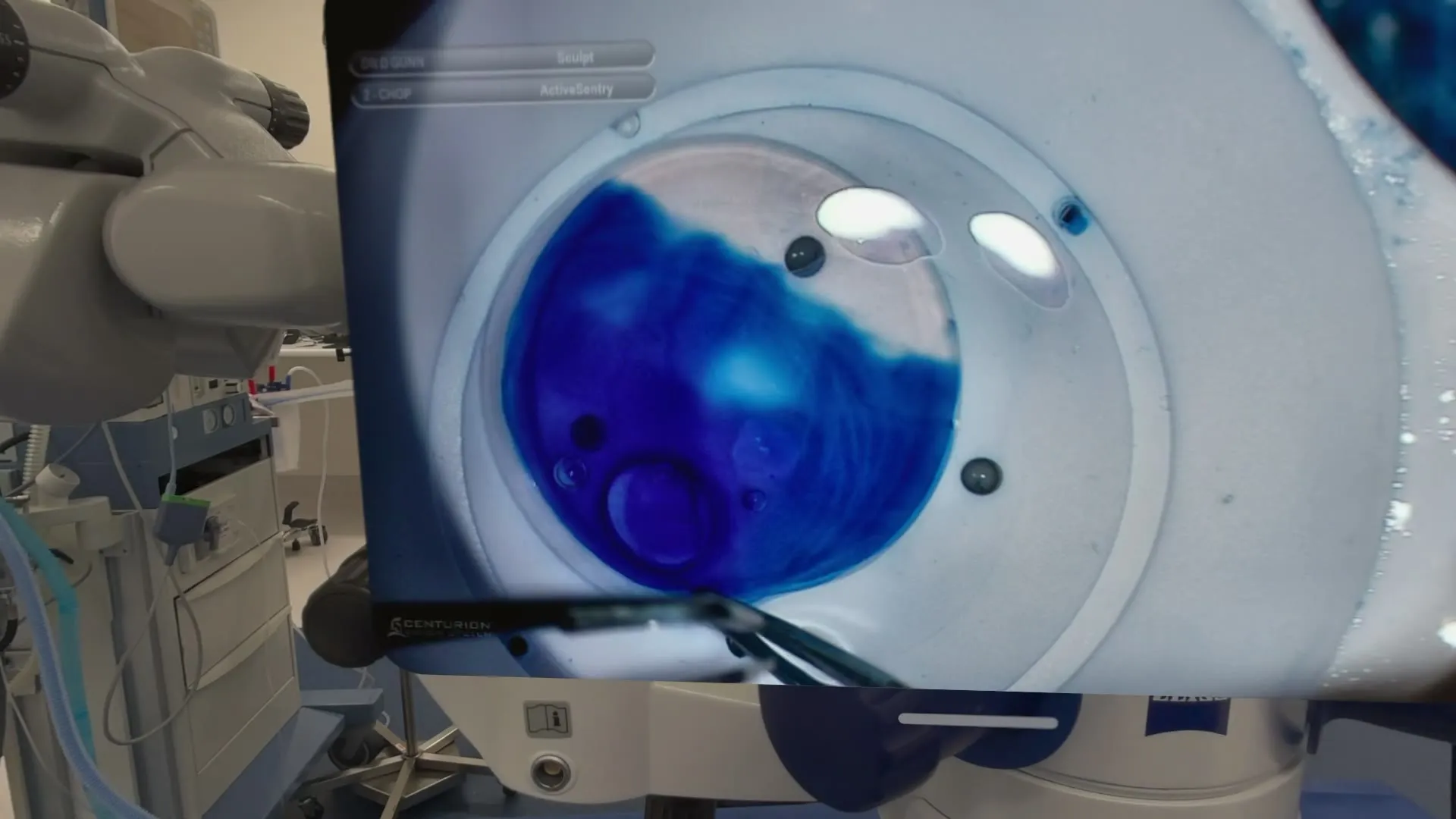
There are teaching benefits as well. The NGENUITY’s large display still shows the theatre team the same stereoscopic view the surgeon is working from, which in July let the whole team watch LASIK in 3D for the first time. And because the whole morning was recorded from the surgeon’s perspective, the cases can be reviewed and taught from a view that used to exist only in one person’s eyepieces.
Live streaming and the connected theatre
The platform is built for more than one surgeon’s view. ScopeXR supports live remote collaboration: another surgeon, anywhere in the world, can join a procedure virtually, see exactly what the operating surgeon sees, including the live feed and the diagnostic data, and speak over secure two-way audio. Dr Rosenberg describes the goal as being able to bring an expert surgeon into any operating room, at any hour, from anywhere on the planet.
The implications reach in several directions. Registrars and fellows could observe from the surgeon’s own perspective rather than over a shoulder. A surgeon facing an unfamiliar finding could bring a subspecialist into the theatre in seconds. Live surgical consultation could reach theatres in regional Australia without anyone boarding a plane.
Dr Gunn sees this morning’s cases as an early step towards a fully digitised theatre, where live patient information, scans and clinical data move with the patient from clinic to theatre and sit in the surgeon’s view the moment they are needed, without breaking sterility. The mid-case plan review during the CAIRS procedure was a small, working preview of exactly that.
Does the headset change the surgery itself?
No. The phaco machine settings, the laser plans and the lens implants were identical to any other Monday. Visualisation technology changes how the surgeon sees, and the early peer-reviewed evidence, from the 2026 JCRS heads-up LASIK study to the UC San Diego series in Surgical Endoscopy, has so far found outcomes comparable to the conventional microscope. That evidence base is young, and it is the reason the conventional setup remains the standard on Dr Gunn’s lists while headset cases are chosen selectively.
The technology will keep improving, and Brisbane patients will be among the first to benefit as it does. If you are exploring treatment for keratoconus, cataract or a corneal condition and want to understand the options, make an appointment with Dr Gunn — the assessment happens with entirely conventional equipment, and you will hear exactly which technology, headset or otherwise, is right for your eye.
Frequently Asked Questions
Did the Apple Vision Pro perform the surgery?
What operations were performed?
Is it safe for a surgeon to operate wearing a headset?
What is ScopeXR?
Does the headset change the result of the surgery?
Can other surgeons watch or join the surgery remotely?
Will Dr Gunn use the Vision Pro for every operation?