FemtoCAIRS for Keratoconus, Four Years On: The 2025 Update at AUSCRS Darwin
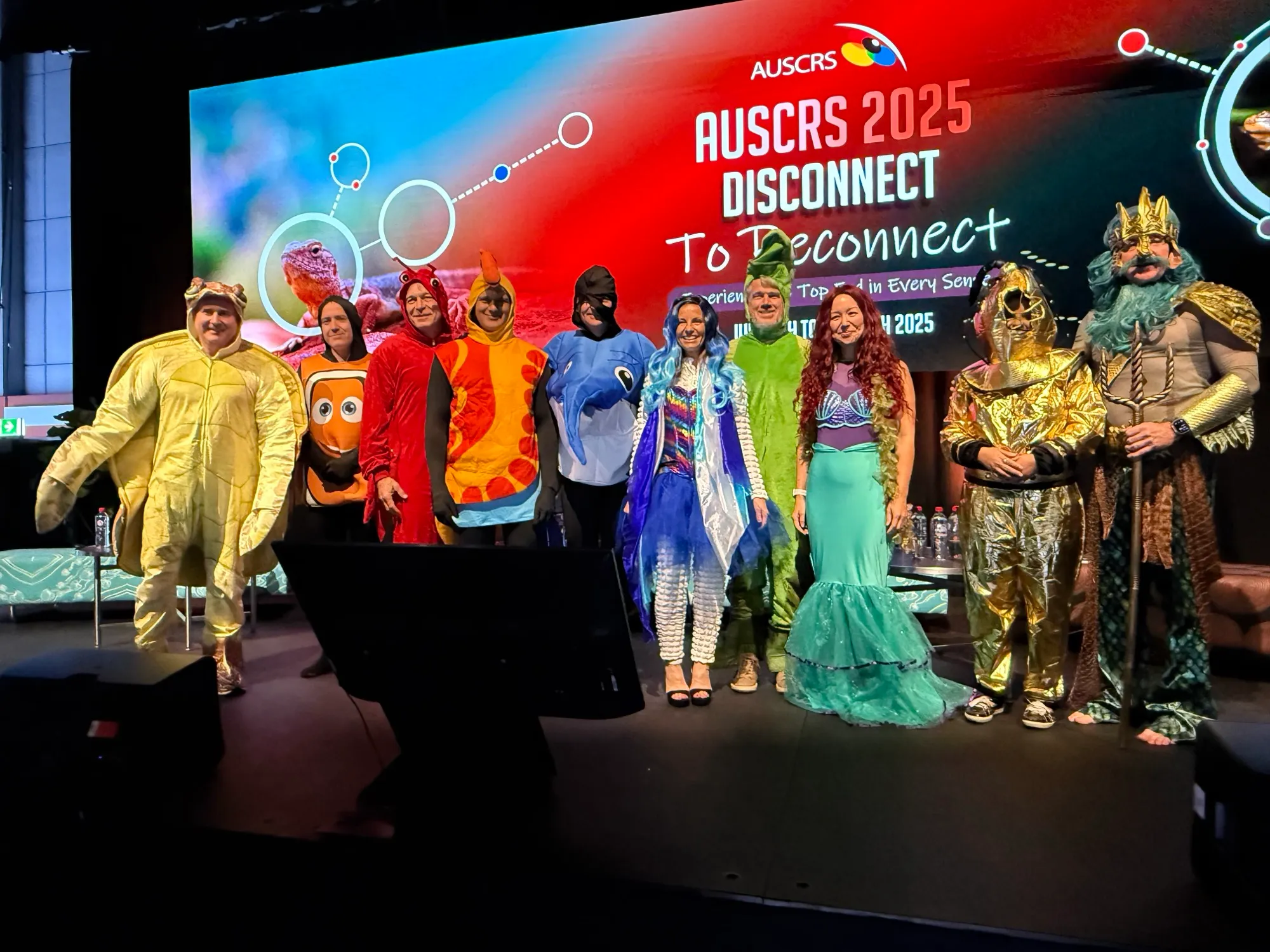
AUSCRS 2025 ran from 16 to 19 July at the Darwin Convention Centre, under the theme Disconnect to reconnect — experience the top end in every sense. Professor Michael Knorz gave the Barrett/Wolfe Lecture.
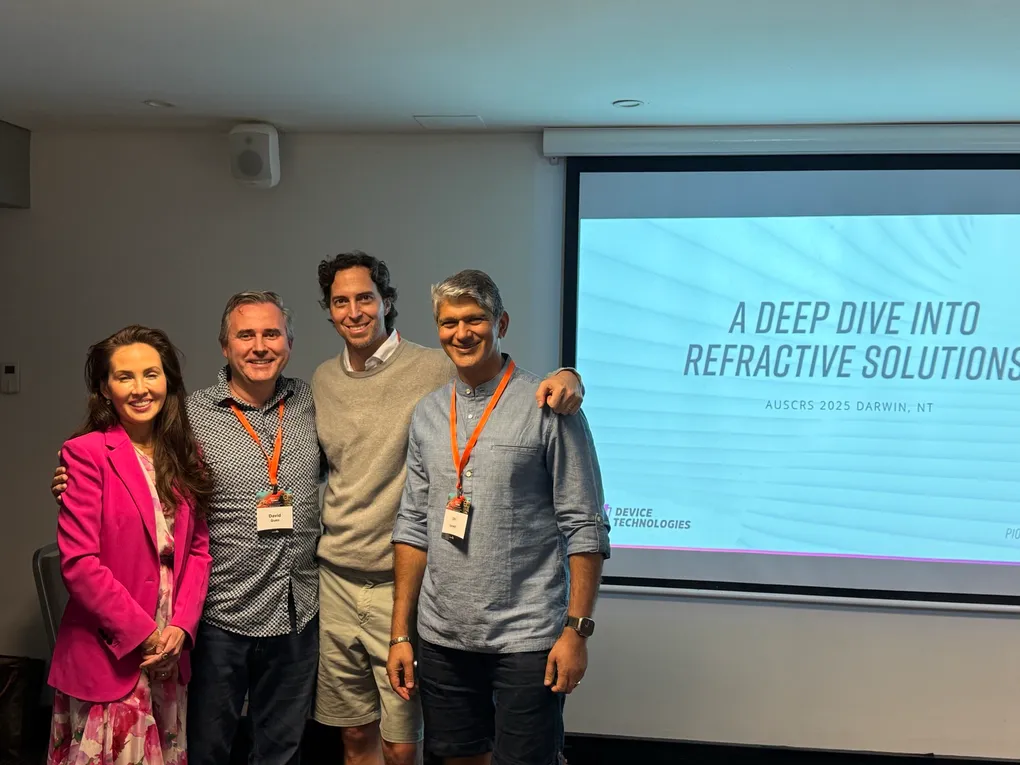
Dr David Gunn presented the 2025 FemtoCAIRS update in the main session, joined the faculty for A Deep Dive into Refractive Solutions, and spoke on Ziemer Z8 surgical applications at the device technology dinner.
The questions have changed
Four years earlier Dr Gunn performed Australia’s first CAIRS case in Brisbane. At the meetings that followed, the questions were about whether implanting donated corneal tissue into a channel was a reasonable thing to do at all.
At Darwin, nobody asked that. The questions were about which segment for which cone, what depth to set the channel, how to handle a cornea that had already been cross-linked, and what to do when the cone sits under the visual axis. Those are the questions surgeons ask when they are doing the operation rather than deciding whether to.
That change is the substance of the four-year update. The Australian experience has moved from a single case to a body of cases with enough consistency to draw rules from.
What four years of cases changed
Planning beats technique. The operative steps are not the hard part. Once a surgeon has done a handful of cases the surgery itself is reproducible. Where results diverge is in the plan: how much flattening a given cone needs, and where to put the arc to achieve it without inducing new irregularity. That is why the Brisbane effort has gone into planning tools rather than instruments.
Reversibility changes the risk conversation. Being able to remove the segments if the result is not right alters how a patient weighs the decision, particularly a young patient who has been told a corneal graft is the only remaining option. It is one of the more useful things to be able to say in clinic.
Progression must be dealt with separately. Ring segments improve shape. They do not stop keratoconus advancing. In an eye that is still changing, cross-linking remains part of the plan.
A deep dive into refractive solutions
The refractive session covered the wider set of options for eyes that are not straightforward: high prescriptions, thin corneas, irregular surfaces, and patients who have had previous surgery elsewhere.
The recurring theme was that the interesting decisions are almost never between two similar operations. They are about whether to treat the cornea, the lens, or neither, and about being willing to tell a patient that the answer is a well-fitted contact lens.
Device technology: the Ziemer Z8
The technology dinner covered the surgical applications of the Ziemer Z8 femtosecond platform, including the channel creation used in CAIRS. The low-energy, mobile design of that laser is a large part of why femtosecond CAIRS became practical in an Australian day-surgery setting rather than only in a large tertiary unit.
For patients in Queensland
Keratoconus treatment in 2025 is not one operation. It is a sequence chosen for your cornea: cross-linking if the disease is progressing, laser regularisation where the surface can safely be smoothed, and CAIRS where the cone needs structural support. Some eyes need all three over time and some need only one.
Working out where your eye sits takes tomography and a proper look at how it has changed. Book an assessment.
Frequently Asked Questions
How long has CAIRS been available in Australia?
Is CAIRS still considered experimental?
How long does recovery from CAIRS take?
Can CAIRS be combined with cross-linking?